

Many people experience the same problem after losing weight. At first, the results feel great. The number on the scale goes down, clothes fit better, and confidence improves.
But after some time, belly fat slowly starts returning. This happens even when eating habits seem normal and effort is still being made. This situation can feel confusing and frustrating, but the truth is simple.
Belly fat behaves differently from fat stored in other parts of the body, and understanding this difference is the key to stopping it from coming back.
Why Belly Fat Is More Stubborn Than Other Body Fat
Belly fat is not just extra fat under the skin. A large part of it is visceral fat, which sits deep inside the abdomen and surrounds important organs. Because of its location, the body treats belly fat as a safety reserve.
When the body feels stress, hunger, or lack of energy, it tries to protect this fat first. That is why belly fat is harder to lose and easier to regain compared to fat in areas like arms or legs.
Why Belly Fat Is the Body’s Emergency Energy Storage
From a survival point of view, belly fat works like an emergency energy store. In difficult situations, this fat helps keep the organs functioning properly.
When food intake drops too much or stress increases, the body holds on to belly fat as protection.
This natural response explains why belly fat often stays even after weight loss and why extreme dieting usually makes the problem worse.
The Real Reason Belly Fat Comes Back After Weight Loss

The main reason belly fat returns is not lack of discipline. It happens because most people focus only on losing weight quickly instead of losing fat in a sustainable way.
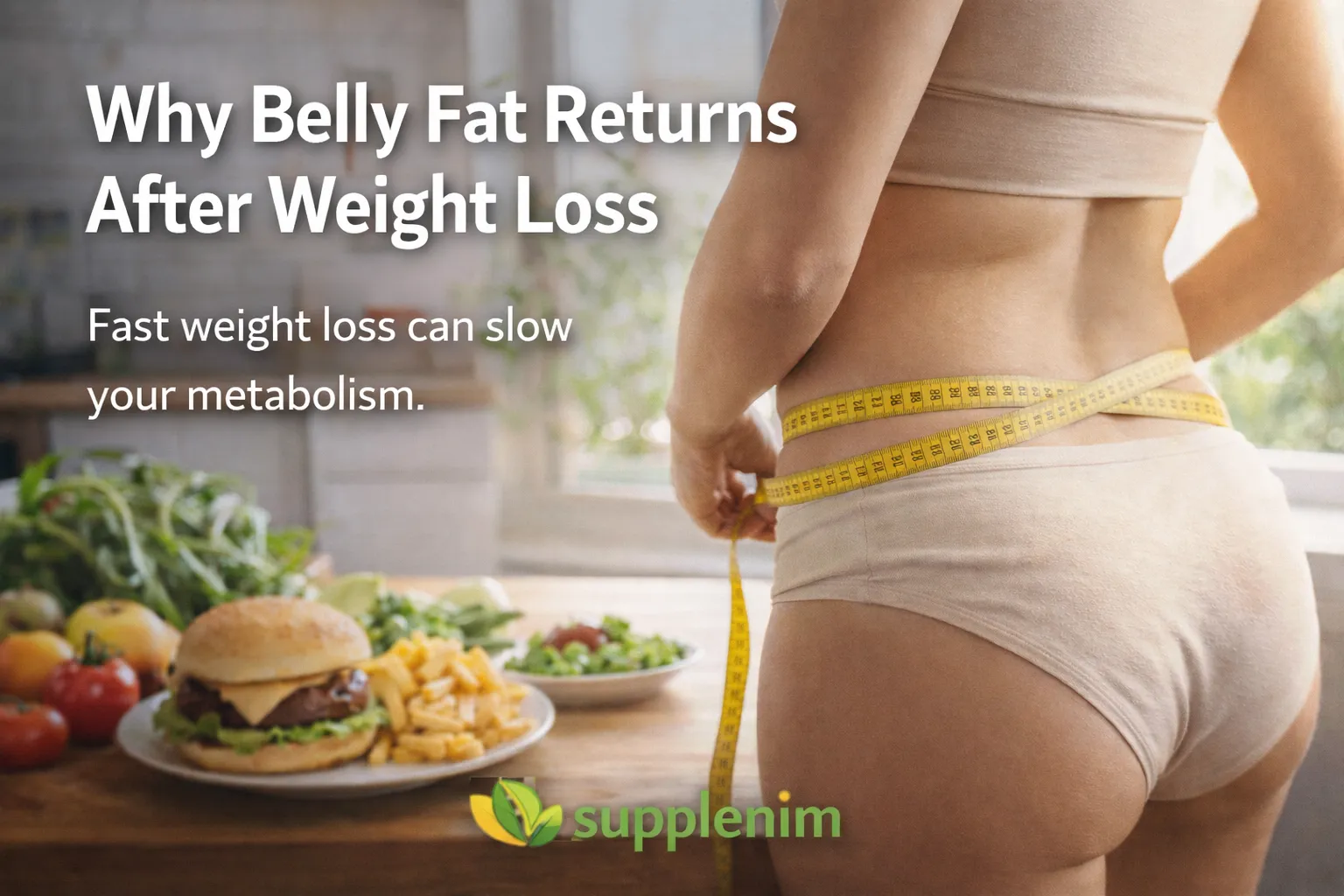
When weight loss happens too fast, the body adapts by slowing metabolism and increasing fat storage efficiency. Once normal eating resumes, the body stores fat more easily, especially around the stomach.
This is the body’s way of preventing future energy shortages.
How Crash Dieting Triggers Belly Fat Regain
Crash dieting is one of the biggest reasons belly fat comes back. When calorie intake is too low, the body enters survival mode.
Muscle mass begins to drop, energy levels fall, and metabolism slows down. This makes the body extremely efficient at storing fat.
When normal food intake returns, the body stores extra calories as belly fat because it has learned to expect restriction. This cycle leads to repeated weight loss and regain, mostly around the abdomen.
Hormones and Stress: The Hidden Belly Fat Connection
Hormones play a major role in belly fat storage, especially the stress hormone cortisol. High stress levels send a signal to the body that it needs to protect itself.
As a result, fat storage increases, particularly in the belly area. Even with healthy eating, high stress can block fat loss progress and encourage fat regain.
How Poor Sleep and High Cortisol Increase Belly Fat
Poor sleep increases cortisol levels and disrupts hunger hormones. When sleep quality is low, cravings rise and fat storage increases.
The body becomes more likely to store calories as belly fat rather than using them for energy. Over time, lack of sleep and constant stress create the perfect environment for belly fat to return.
Why Losing Weight Without Strength Training Backfires
Many people rely only on cardio to lose weight, but this approach often leads to muscle loss. Muscle is important because it keeps metabolism active.
When muscle mass decreases, the body burns fewer calories throughout the day. This makes fat regain more likely, especially in the belly area.
Without strength training, weight loss becomes unstable and difficult to maintain.
Why Protein Intake Matters More Than Cardio Alone
Protein supports muscle preservation and helps control hunger. Without enough protein, the body loses muscle during weight loss, which slows metabolism further.
Cardio alone may reduce weight on the scale, but protein intake and resistance training are essential for long-term belly fat control.
The Role of Metabolism Slowdown in Belly Fat Return
Metabolism naturally adjusts to dieting. After repeated calorie restriction, the body becomes more efficient and burns fewer calories at rest.
This adaptive slowdown does not mean metabolism is damaged, but it does mean fat regain becomes easier. Belly fat returns quickly when the body is not supported with enough food, movement, and recovery.
Daily Habits That Secretly Push Belly Fat Back
Small daily habits often play a bigger role than people realize. Skipping meals, eating too little protein, sitting for long hours, sleeping late, and constant screen exposure can all affect hormones and metabolism.
These habits slowly push the body toward fat storage again, even when calorie intake does not seem high.
How to Stop Belly Fat From Coming Back Naturally (Long-Term Approach)

Stopping belly fat from returning requires a long-term mindset. Instead of extreme dieting, the focus should be on balanced meals, regular movement, and proper recovery.
Eating enough food, especially protein, helps the body feel safe and supported. Strength training helps maintain muscle and keeps metabolism active.
Managing stress and improving sleep quality reduce cortisol levels and support natural fat loss. When the body feels stable and nourished, it no longer needs to store excess belly fat.
The Difference Between Temporary Weight Loss and Real Fat Loss
Temporary weight loss focuses on short-term results and scale numbers. Real fat loss focuses on health, strength, energy, and consistency.
When fat loss happens in a balanced way, belly fat does not rush back. The body adapts positively instead of defensively.
FAQs Why Belly Fat Comes Back After Weight Loss
How to reduce belly fat and back fat naturally?
Belly fat and back fat reduce naturally when you follow balanced eating, regular strength training, and light daily movement. Focus on enough protein, good sleep, and stress control. Consistency over time is more important than quick fixes.
How to get rid of belly fat after losing a lot of weight?
After major weight loss, focus on strength training and proper nutrition to rebuild muscle and support metabolism. Avoid crash dieting and eat enough protein daily. Good sleep and stress control help stop belly fat from returning.
How to stop weight regain after weight loss?
To stop weight regain, avoid extreme dieting and build steady eating habits you can maintain long term. Strength training helps keep metabolism active. Managing sleep and stress makes fat regain less likely.
Which drink burns belly fat?
No drink can directly burn belly fat on its own. Water, green tea, and lemon water support hydration and metabolism when combined with healthy habits. Real fat loss comes from balanced eating, movement, and consistency over time.
How does sleep affect weight loss?
Sleep controls hunger and stress hormones that affect fat storage. Poor sleep increases cravings and belly fat gain. Quality sleep supports better metabolism and long-term weight loss.
Conclusion
Belly fat comes back when the body feels stressed, underfed, or unprotected. It stays away when the body feels strong, rested, and well nourished.
Sustainable habits create an environment where fat loss happens naturally and stays long term.
By working with the body instead of fighting it, belly fat can be controlled without extreme measures.