
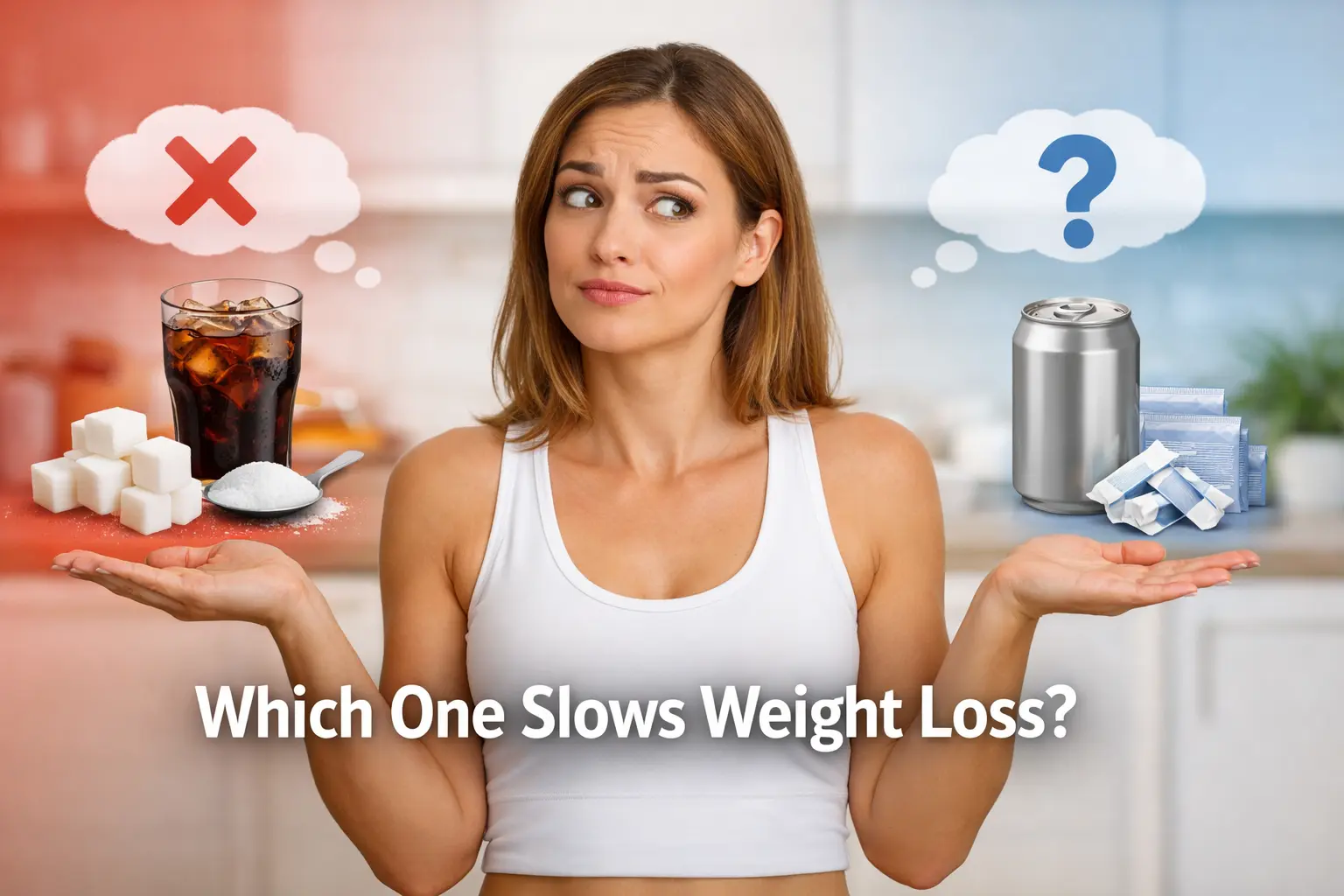
If you are trying to lose weight, one small daily habit can quietly slow your results—what you use to sweeten your food and drinks. Many people cut sugar and switch to artificial sweeteners, thinking they are making a healthier choice. But the truth is not that simple. The debate around sugar vs artificial sweeteners for weight loss is more important than most people realize, especially if fat loss is your main goal.
Sugar has been part of our diet for centuries, while artificial sweeteners are marketed as a modern solution for weight control. Both seem harmless in small amounts, yet both can affect your metabolism, hunger signals, and fat storage in different ways. Understanding how each one works in your body can help you avoid common weight-loss mistakes and make smarter choices that actually support long-term fat loss.
How Sugar Affects Weight Loss
Sugar provides quick energy, but it also comes with hidden problems. When you consume sugar, your blood sugar rises rapidly. In response, your body releases insulin to move that sugar into your cells. High insulin levels make it harder for your body to burn stored fat, which directly impacts weight loss.
Another issue is that sugar calories do not keep you full for long. Sweet foods and drinks digest quickly, leading to hunger soon after eating. This often results in overeating without realizing it. Over time, regular sugar intake can lead to insulin resistance, increased belly fat, and stronger cravings for more sweets.
In any sugar and weight loss comparison, sugar clearly works against fat loss when consumed frequently. Even “natural” sugars from desserts, sweet drinks, or processed foods can slow progress if portions are not controlled.
What Are Artificial Sweeteners?
Artificial sweeteners are low-calorie or zero-calorie substances designed to replace sugar. Popular examples include sucralose, aspartame, and saccharin. They taste sweet but contain little to no energy, which is why many people believe they are the best sweetener for weight loss.
On paper, artificial sweeteners seem perfect. You get sweetness without calories, which should help reduce total calorie intake. This is why they are commonly used in diet sodas, sugar-free desserts, and weight-loss products. However, the real effect on the body can be more complex.
Do Artificial Sweeteners Slow Weight Loss?
One important question many people ask is whether artificial sweeteners slow weight loss. Research and real-world experience suggest that for some people, they might.

Artificial sweeteners can confuse your brain. When you taste something sweet, your body expects calories. If calories do not arrive, your brain may trigger hunger signals later. This can increase cravings, especially for sugary or high-carb foods. Some people end up eating more overall, even if their sweetener has zero calories.
There is also evidence that artificial sweeteners may affect gut bacteria. An unhealthy gut can interfere with blood sugar control and fat metabolism, making weight loss harder over time. This does not mean artificial sweeteners are “bad” for everyone, but relying on them heavily can slow progress for certain individuals.
Sugar vs Sweetener Fat Loss: Which Is Worse?
When it comes to sugar vs sweetener fat loss, the answer depends on how much and how often you consume them. Sugar clearly adds calories and spikes insulin, which directly promotes fat storage when consumed in excess. Artificial sweeteners do not add calories, but they can indirectly affect appetite and eating behavior.
If someone drinks sugary beverages daily, switching to a sugar-free option may help reduce calorie intake in the short term. However, if artificial sweeteners lead to stronger cravings or overeating later, fat loss can still stall.
So, is sugar worse than artificial sweeteners? From a calorie and insulin perspective, sugar is generally more harmful for weight loss. But artificial sweeteners are not a magic solution either, especially when overused.
The Psychological Side of Sweeteners
Another often ignored factor in the sugar vs artificial sweeteners for weight loss debate is mindset. Artificial sweeteners can sometimes create a false sense of security. People may think, “This is sugar-free, so I can have more.” This mindset can lead to overeating and slower results.
Sugar, on the other hand, is easier to recognize as something that should be limited. This awareness can sometimes help people control portions better. Weight loss is not only about calories but also habits, awareness, and consistency.
Best Sweetener for Weight Loss: What Should You Choose?
There is no single best sweetener for weight loss that works perfectly for everyone. The best option is the one that supports your calorie control, reduces cravings, and fits your lifestyle.
For many people, reducing overall sweetness is more effective than replacing sugar with artificial alternatives. Using small amounts of natural sweeteners occasionally, while focusing on whole foods, often leads to better long-term results.
If you choose artificial sweeteners, moderation is key. Use them as a temporary tool, not a daily dependency. Pay attention to how your body responds. If cravings increase or weight loss stalls, it may be time to cut back.
Why Reducing Sweet Taste Helps Fat Loss
One powerful strategy for fat loss is training your taste buds to prefer less sweetness. When you reduce both sugar and artificial sweeteners, your body becomes more sensitive to natural flavors. Fruits taste sweeter, and cravings become easier to manage.
This approach helps stabilize blood sugar levels, reduce emotional eating, and support healthy digestion. Over time, many people find that they no longer need sweeteners to enjoy their food, which makes weight loss more sustainable.
Smart Tips to Avoid Weight Loss Plateaus
To avoid plateaus related to sweeteners, focus on balanced meals with protein, fiber, and healthy fats. These nutrients keep you full longer and reduce the desire for sweet snacks. Drink more water, get enough sleep, and manage stress, as these factors strongly influence cravings.
Instead of asking whether sugar or artificial sweeteners are worse, it is better to ask how often and why you are using them. Mindful eating and portion control matter more than choosing one sweetener over another.
Final Thoughts on Sugar vs Artificial Sweeteners for Weight Loss
The debate around sugar vs artificial sweeteners for weight loss does not have a one-size-fits-all answer. Sugar clearly slows fat loss when consumed regularly, while artificial sweeteners can help reduce calories but may cause issues if overused.
The most effective approach is moderation, awareness, and long-term habit change. Reducing dependence on sweet flavors, choosing whole foods, and listening to your body will support steady fat loss without unnecessary frustration.
If your goal is sustainable weight loss, focus less on finding the “perfect” sweetener and more on building a lifestyle that naturally supports healthy eating and balanced energy. That is where real results begin.
Sugar vs Artificial Sweeteners for Weight Loss FAQs
Q1. Do artificial sweeteners slow weight loss?
Artificial sweeteners may not directly add calories, but they can sometimes increase cravings or affect gut health, which might indirectly slow weight loss for some people.
Q2. Is sugar worse than artificial sweeteners for fat loss?
Regular sugar spikes insulin and adds calories, which can promote fat storage. In moderation, artificial sweeteners may be a better option, but overuse can still affect appetite.
Q3. What is the best sweetener for weight loss?
Natural options like stevia or honey in small amounts are often preferred. Reducing overall sweetness in your diet helps control cravings and supports sustainable fat loss.
Q4. Can switching to artificial sweeteners help reduce calories?
Yes, replacing sugary drinks or desserts with sugar-free alternatives can lower calorie intake, but mindful eating and portion control are still important to avoid overeating.
Q5. How do sugar and artificial sweeteners affect appetite?
Sugar causes quick energy spikes followed by hunger, while artificial sweeteners may confuse the brain’s calorie expectations, sometimes leading to increased cravings later.