
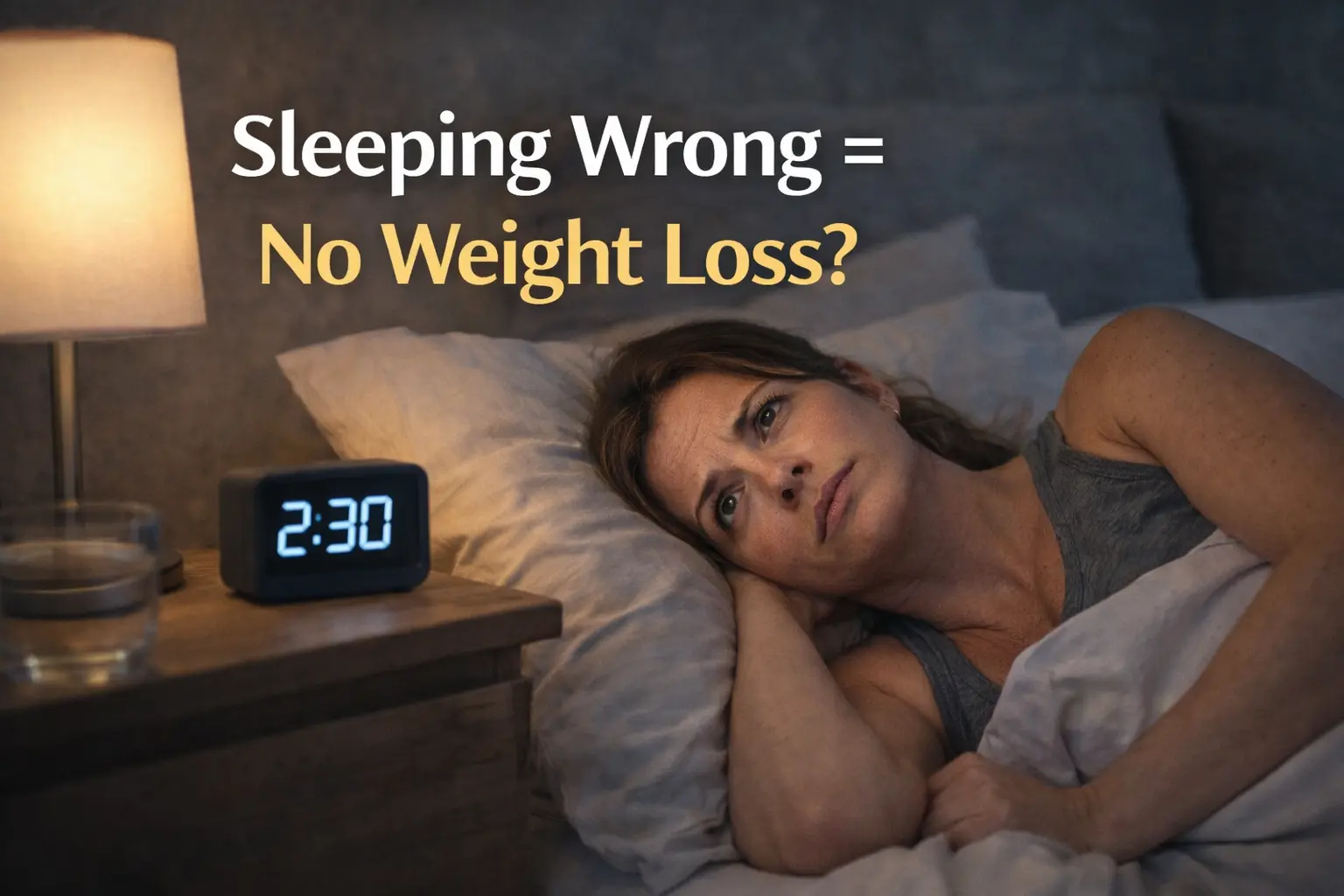
Most people believe weight loss is only about eating less and moving more. So they count calories, follow diets, and push themselves in the gym. But even after doing everything “right,” many people feel stuck. The scale does not move, energy stays low, and motivation slowly fades. What most people don’t realize is that sleep quality and weight loss are deeply connected. Without good sleep, the body simply does not cooperate with fat loss, no matter how hard you try.
Why Sleep Quality and Weight Loss Are Strongly Connected
Sleep is not just rest. It is the time when your body repairs, balances hormones, and resets metabolism. When sleep quality and weight loss work together, fat loss feels natural and steady. But when sleep is poor, the body focuses on survival, not weight loss.
Poor sleep confuses your hunger signals, slows calorie burning, and increases stress. That is why many people experience weight loss without enough sleep as almost impossible. Your body needs quality sleep to feel safe enough to let go of stored fat.
Poor Sleep and Weight Gain: What Really Happens at Night
Many people don’t connect their weight gain to sleep. But poor sleep and weight gain often go hand in hand.
When you sleep less:
- Hunger hormone (ghrelin) increases
- Fullness hormone (leptin) decreases
- Cravings become stronger
- Late-night snacking increases
This hormonal shift directly affects sleep quality and weight loss. Even if you eat healthy foods, your body pushes you to eat more when sleep is poor. Over time, this leads to gradual weight gain without you noticing.
How Sleep Affects Fat Loss at the Hormonal Level
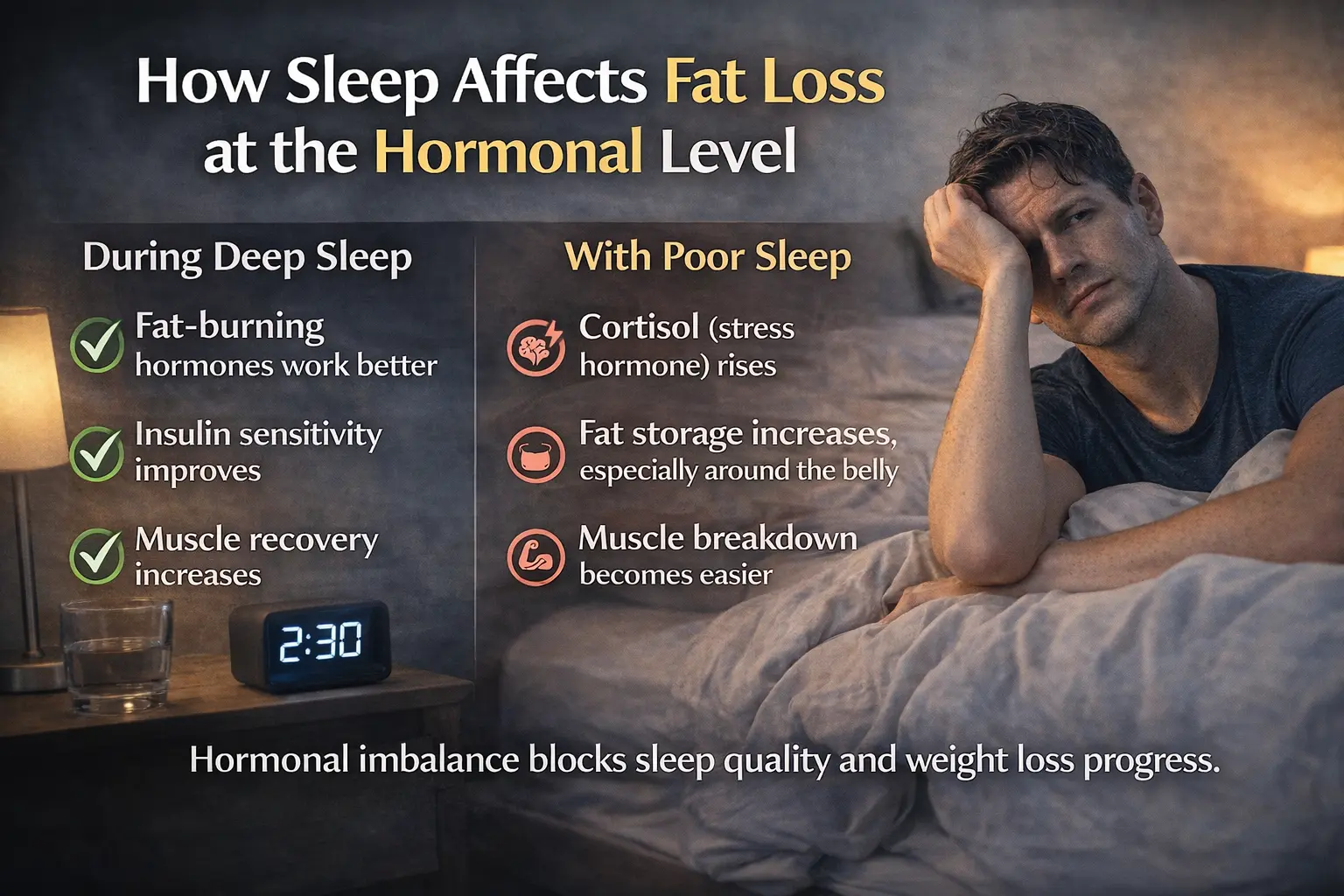
To understand how sleep affects fat loss, you need to understand hormones.
During deep sleep:
- Fat-burning hormones work better
- Insulin sensitivity improves
- Muscle recovery increases
But with poor sleep:
- Cortisol (stress hormone) rises
- Fat storage increases, especially around the belly
- Muscle breakdown becomes easier
This hormonal imbalance blocks sleep quality and weight loss progress. Your body becomes resistant to fat loss because it feels stressed and tired.
Sleep Deprivation and Metabolism: Why Your Body Burns Fewer Calories
One of the biggest problems is sleep deprivation and metabolism.
Lack of sleep slows down your metabolic rate. This means your body burns fewer calories at rest. Even worse, sleep-deprived bodies become better at storing calories as fat.
This is why two people eating the same food can have different results. The one with better sleep quality and weight loss balance will lose weight faster than the one who sleeps poorly.
Why Weight Loss Without Enough Sleep Feels Impossible
Many people blame themselves when weight loss does not happen. But weight loss without enough sleep is like driving with the brakes on.
Signs sleep is blocking your progress:
- You feel tired even after rest
- You crave sugar or carbs often
- Your workouts feel harder than before
- The scale does not change
All of this happens because sleep quality and weight loss depend on recovery. Without enough sleep, the body refuses to release fat.
Sleep and Hormone Balance: The Hidden Key to Fat Loss
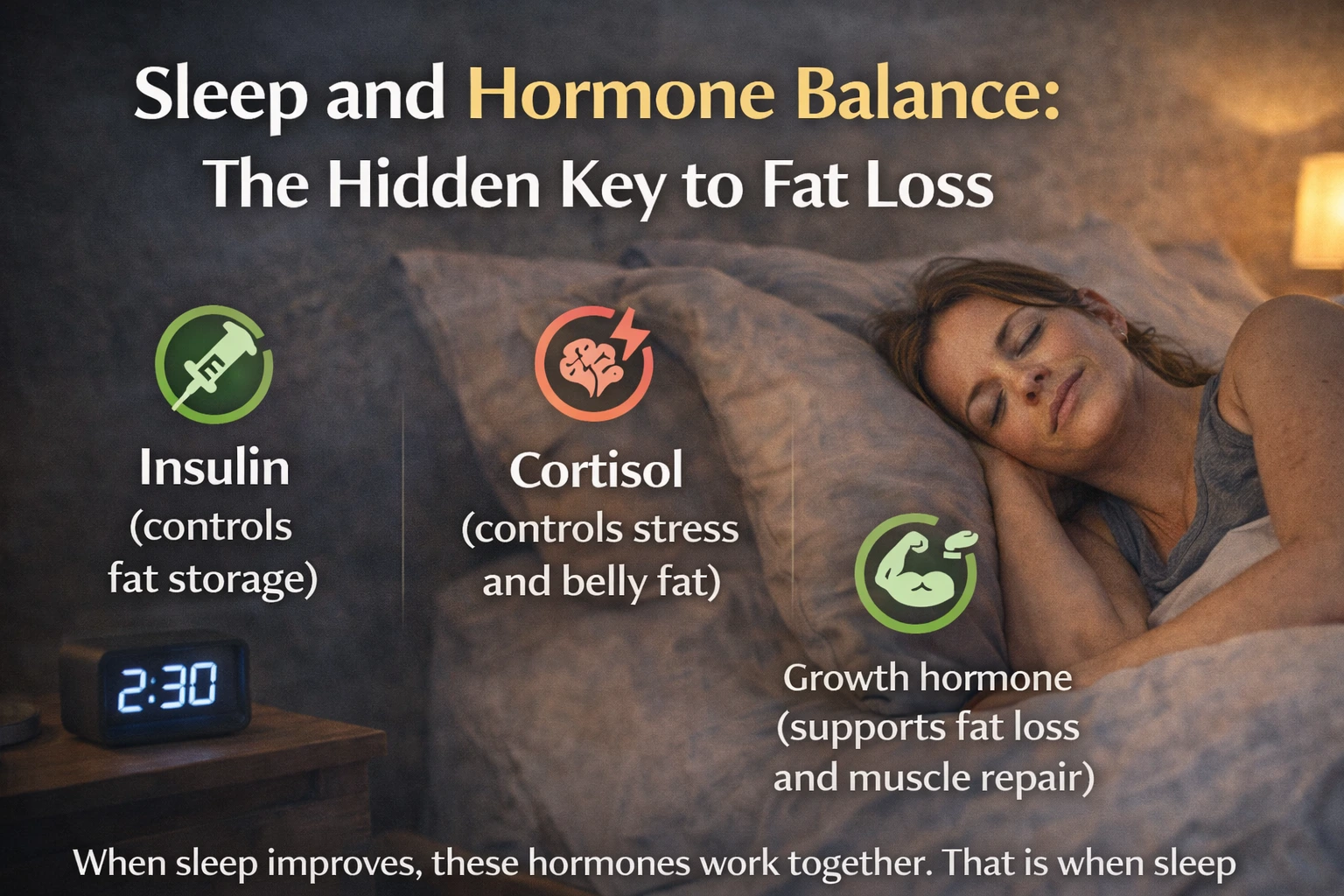
Sleep and hormone balance is one of the most ignored topics in weight loss.
Good sleep helps balance:
- Insulin (controls fat storage)
- Cortisol (controls stress and belly fat)
- Growth hormone (supports fat loss and muscle repair)
When sleep improves, these hormones work together. That is when sleep quality and weight loss start feeling easier, not forced.
Why Sleep Matters for Weight Loss More Than Diet Alone
People often ask why they follow a good diet but still don’t lose weight. The answer is simple: why sleep matters for weight loss is bigger than most diet plans.
A perfect diet cannot fix poor sleep. But good sleep can improve almost any diet. Better sleep reduces emotional eating, improves food choices, and supports fat loss naturally.
That’s why focusing on sleep quality and weight loss gives better long-term results than extreme dieting.
Simple Ways to Improve Sleep Quality and Weight Loss Together
You don’t need complicated routines. Small changes can improve sleep quality and weight loss at the same time.
Try these habits:
- Sleep and wake up at the same time daily
- Avoid screens at least 1 hour before bed
- Eat dinner earlier and lighter
- Keep your bedroom dark and cool
- Avoid intense workouts late at night
These habits support better sleep, hormone balance, and fat loss without stress.
How Long Does It Take for Better Sleep to Affect Weight Loss?
This is important to understand.
Sleep improvements don’t show instant results on the scale. But within 2–3 weeks, many people notice:
- Reduced cravings
- Better energy
- Improved mood
- Less bloating
As sleep quality and weight loss align, the body slowly starts responding. The results may be slow, but they are more stable and sustainable.
Real Reason Why Sleep Quality and Weight Loss Feel So Hard Today
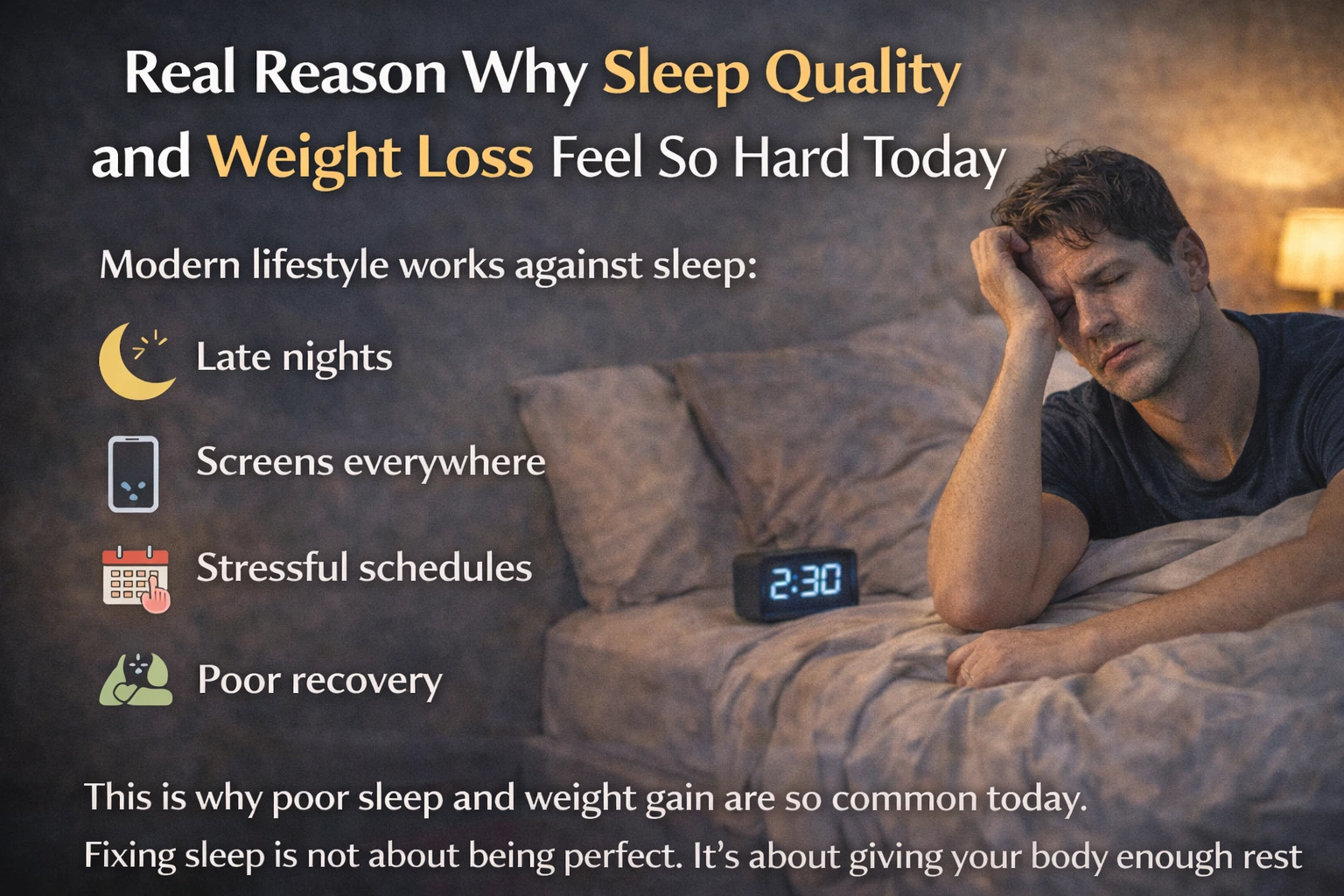
Modern lifestyle works against sleep:
- Late nights
- Screens everywhere
- Stressful schedules
- Poor recovery
This is why poor sleep and weight gain are so common today. Fixing sleep is not about being perfect. It’s about giving your body enough rest to function properly.
Final Thoughts: Sleep Quality and Weight Loss Work Quietly
Weight loss does not always need more effort. Sometimes it needs more rest.
When you improve sleep quality and weight loss, your body stops fighting you. Hunger becomes manageable, energy improves, and fat loss feels natural.
If your progress feels stuck, don’t ask:
“What diet should I follow next?”
Ask:
“How can I sleep better?”
Because when sleep improves, everything else starts working.
Quick FAQs
Q.1: Can poor sleep really stop weight loss?
Yes. Poor sleep quality and weight loss connection can block fat loss completely.
Q.2: How many hours of sleep are ideal?
7–9 hours supports healthy metabolism and hormone balance.
Q.3: Does sleep affect belly fat?
Yes. High cortisol from poor sleep increases belly fat storage.
Q.4: Can improving sleep reduce cravings?
Absolutely. Better sleep balances hunger hormones naturally.