



Many people start dieting with one simple goal: lose weight fast. At first, results may look promising. The scale moves down, clothes feel looser, and motivation feels high. But after some time, weight loss slows or completely stops. This leads to an important question: how long does it take for metabolism to slow down when dieting? And even more importantly, how long does it take to fix slow metabolism once it happens?
Metabolism is not a machine that runs at the same speed forever. It changes based on food intake, sleep, stress, and hormones. When dieting is too aggressive, your body may enter a survival mode. This article explains what really happens to metabolism during dieting, how sleep plays a role, and what you can do to protect and restore your metabolic health.
How Fast Does Metabolism Slow Down When You Start Dieting?
Metabolism can begin to slow down much sooner than most people expect. In many cases, the body reacts within a few days to one week of heavy calorie restriction.
When you eat much less than your body needs, your system tries to conserve energy. It burns fewer calories at rest and becomes more efficient at storing fat. This response is natural and meant to protect you from starvation.
What Happens to Your Metabolism in the First 7 Days of Dieting?
During the first week of dieting, several things happen:
-
Your body uses stored carbohydrates (glycogen) for fuel
-
Water weight drops quickly
-
Hunger hormones increase
-
Resting energy use may decrease slightly
At this stage, the slowdown is small. But if the diet continues with very low calories, the effect becomes stronger over time. This is when people feel tired, cold, and stuck at the same weight.
Why Calorie Restriction Triggers Metabolic Adaptation


Metabolic adaptation is the body’s way of adjusting to less food. It is not a failure. It is a survival response.
When calories drop too low:
-
Muscle mass may decrease
-
Thyroid hormone activity may reduce
-
Fat-burning enzymes become less active
-
The brain sends signals to slow energy use
This is why extreme diets often fail long term. The body is trying to protect itself, not sabotage your goals.
Metabolic adaptation also explains why people regain weight easily after strict dieting. Their metabolism is slower, but their eating habits return to normal. This mismatch leads to fat gain.
The Hidden Link Between Dieting Stress and Sleep Quality
Dieting does not only stress the body physically. It also creates mental pressure. Worrying about food, tracking calories, and fighting hunger can increase stress levels.
High stress affects sleep quality. People who diet hard often:
-
Fall asleep late
-
Wake up during the night
-
Feel restless
-
Sleep fewer hours
Poor sleep makes it harder for the body to recover from calorie restriction. This creates a cycle: less food → more stress → poor sleep → slower metabolism.
Can Poor Sleep Slow Down Metabolism During Weight Loss?
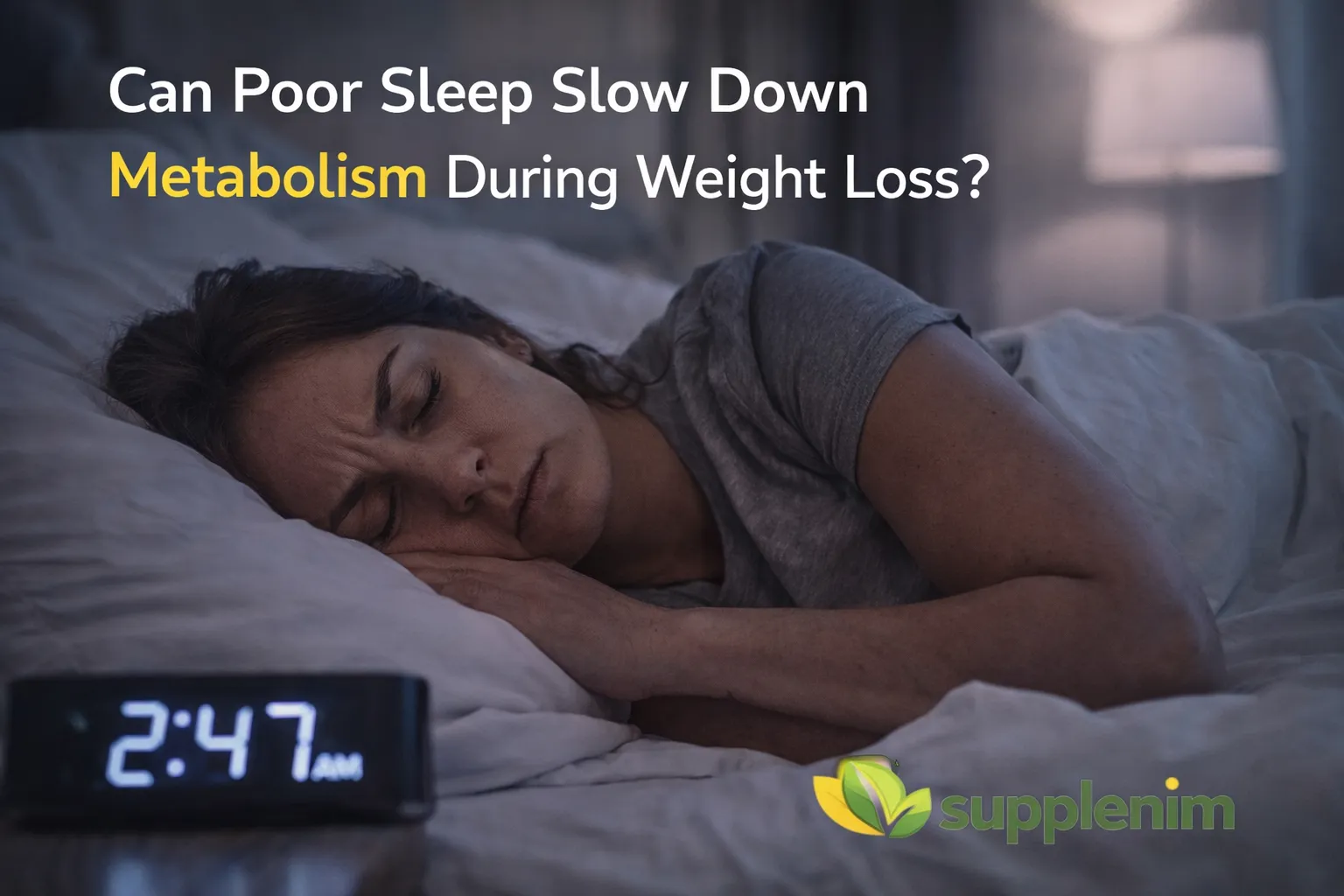
Yes, poor sleep can slow down metabolism, especially during dieting. Sleep is when the body repairs itself and balances hormones. Without enough sleep, these systems become unstable.
How Sleep Deprivation Affects Insulin and Fat Burning
When sleep is short or broken:
-
Insulin sensitivity drops
-
Blood sugar control becomes weaker
-
Fat storage increases
-
Muscle repair slows down
This means your body burns fewer calories and stores more fat, even if you are eating less. Over time, this makes weight loss harder and metabolic slowdown more likely.
Poor sleep also increases cravings for sugar and processed food. This makes sticking to a healthy diet more difficult.
How Hormones Change When Dieting and Sleeping Less
Hormones control how fast or slow metabolism works. Dieting and poor sleep together can disturb several key hormones.
H3: Why Cortisol Increases When You Diet and Sleep Less
Cortisol is a stress hormone. It rises when the body feels under pressure. Both calorie restriction and sleep loss increase cortisol levels.
High cortisol can:
-
Encourage fat storage
-
Break down muscle tissue
-
Slow down metabolic rate
-
Increase appetite
Other hormones affected include:
-
Leptin (controls fullness)
-
Ghrelin (controls hunger)
-
Thyroid hormones (regulate energy use)
When these hormones are out of balance, the body becomes less efficient at burning calories.
Signs Your Metabolism Is Slowing From Dieting and Poor Sleep

A slow metabolism does not happen overnight. It develops gradually. Common signs include:
-
Constant fatigue
-
Feeling cold often
-
Hair thinning or dry skin
-
Low motivation
-
Stalled weight loss
-
Increased fat gain despite eating less
-
Poor concentration
-
Trouble sleeping
These signs do not always mean your metabolism is damaged, but they may show it is adapting to stress from dieting and lack of sleep.
How Long Does It Take to Restore Metabolism After Dieting?
This is one of the most important questions: How long does it take to fix slow metabolism?
The answer depends on:
-
How long you dieted
-
How extreme the calorie cut was
-
Your sleep quality
-
Your activity level
-
Your stress levels
For mild slowdown, metabolism may recover in 2 to 4 weeks with proper nutrition and rest.
For stronger adaptation, it can take several months of balanced eating and lifestyle repair.
Restoring metabolism is not about eating more junk food. It is about:
-
Eating enough calories
-
Supporting hormones
-
Improving sleep
-
Reducing stress
-
Preserving muscle mass
Metabolism improves when the body feels safe again.
Practical Ways to Protect Metabolism While Dieting and Sleeping Better

You do not need to avoid dieting completely. You just need to diet smart.
Here are ways to protect your metabolism and support recovery:
-
Avoid extreme calorie cuts
-
Eat protein with every meal
-
Include resistance training
-
Sleep 7 to 8 hours daily
-
Take short breaks from dieting
-
Manage stress through movement or relaxation
-
Eat whole foods instead of ultra-processed foods
H3: Can Better Sleep Speed Up Metabolism Without Changing Calories?
Better sleep can improve metabolism even without changing calorie intake. Sleep helps:
-
Balance hunger hormones
-
Improve insulin response
-
Reduce stress signals
-
Support muscle repair
-
Stabilize energy use
People who sleep well often lose fat more easily than those who eat the same diet but sleep poorly. This shows how powerful sleep is for metabolic health.
FAQs How Long Does It Take to Fix Slow Metabolism?
Q.1 Will 1200 calories slow metabolism?
Yes, eating 1200 calories can slow your metabolism if it is much lower than your body’s energy needs.
Your body may respond by burning fewer calories and increasing hunger hormones.
Over time, this can make fat loss harder and lead to low energy and muscle loss.
Q.2 Will my metabolism slow down if I eat 1000 calories a day?
Yes, eating 1000 calories a day can slow your metabolism, especially if your body needs much more energy than that.
Your body may go into energy-saving mode and burn fewer calories to protect itself.
This can cause fatigue, muscle loss, and make weight loss slower over time.
Q.3 How do I tell if my metabolism is slow?
You may have a slow metabolism if you feel tired often, gain weight easily, or lose weight very slowly even with diet and exercise.
Other signs include feeling cold, low energy, and frequent hunger or cravings.
These symptoms suggest your body may be burning fewer calories than normal.
Q.4 How to diet without slowing metabolism?
You can diet without slowing your metabolism by avoiding very low calories and eating enough protein to protect muscle mass.
Get good sleep, manage stress, and include light strength training to keep your body burning energy normally.
Slow, steady weight loss works better than extreme dieting for long-term metabolism health.
Q.5 Which body part loses fat first?
Fat loss usually starts from areas where your body stores fat more easily, like the face, neck, and arms.
Stubborn areas such as the belly, hips, and thighs tend to lose fat later.
The exact order depends on your genetics, hormones, and overall lifestyle.
Conclusion: How Long Does It Take to Fix Slow Metabolism?
So, how long does it take for metabolism to slow down when dieting?
In many cases, it can begin within the first week of aggressive calorie restriction.
And how long does it take to fix slow metabolism?
Recovery usually takes weeks to months, depending on how much stress the body experienced.
The key lesson is simple:
Metabolism does not break easily, but it does respond to stress. Extreme dieting and poor sleep send danger signals to the body. Balanced eating, good sleep, and stress control send safety signals.
If your goal is long-term weight control and health, focus less on eating less and more on living better. A healthy metabolism is not built through punishment. It is built through consistency, recovery, and respect for your body.
About the Author
Written by Supplenim Health, a platform focused on sharing research-based insights on weight loss, metabolism, and nutrition.
Medical Disclaimer
This article is for informational purposes only and does not provide medical advice. Always consult a healthcare professional before making health-related decisions.