
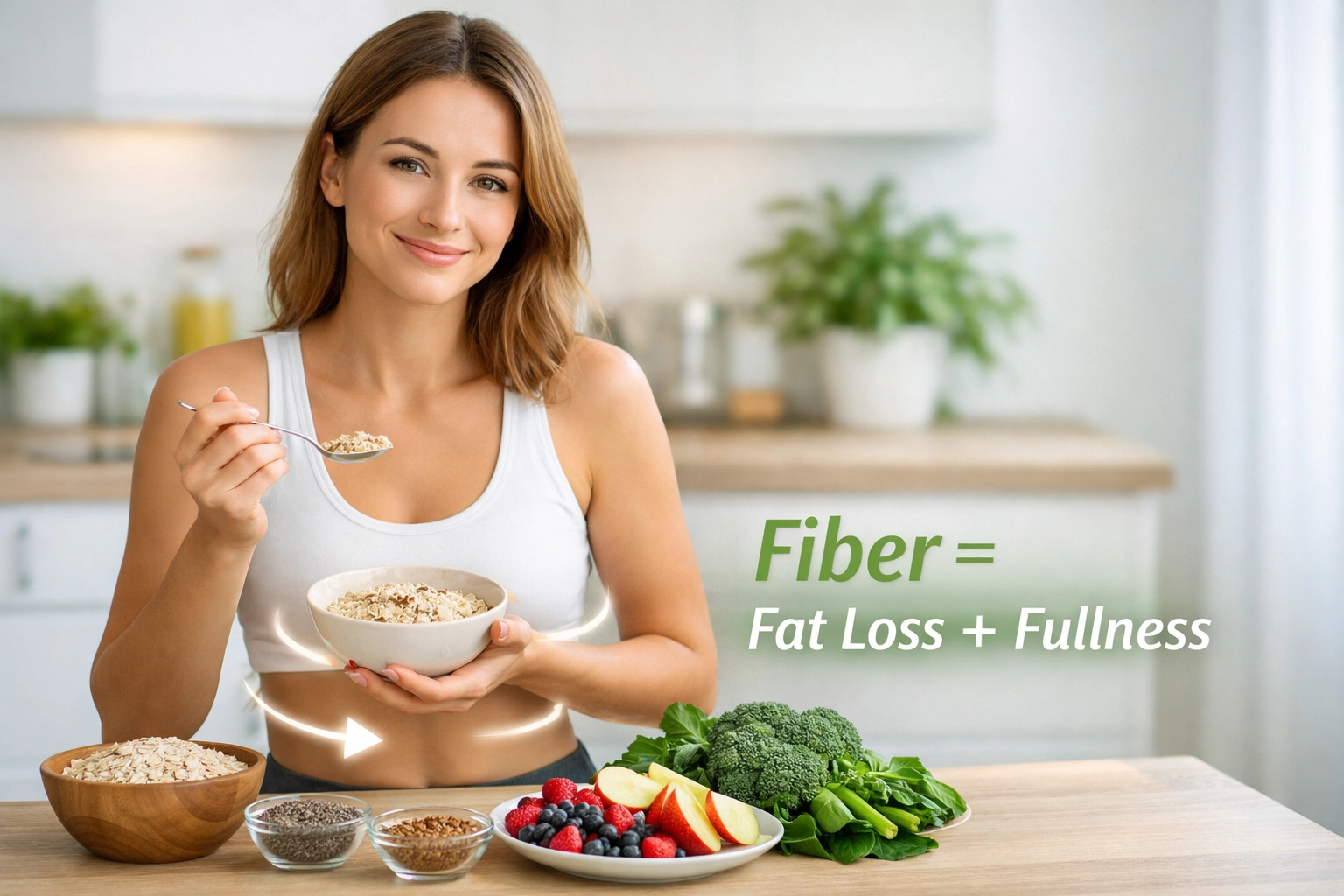
Losing weight is not just about eating less food. It is about eating the right food that supports your body, controls hunger, and helps burn stored fat naturally. One of the most powerful yet underrated nutrients for fat loss is fiber. Many people focus only on calories or protein, but they ignore fiber, even though it plays a major role in appetite control, digestion, and long-term weight management.
In this article, you will clearly understand how fiber helps burn fat and control hunger naturally, why it is important for belly fat reduction, and how adding more fiber to your daily meals can support healthy and sustainable weight loss without extreme dieting.
What Is Fiber and Why Your Body Needs It
Fiber is a type of carbohydrate found in plant foods that the body cannot fully digest. Unlike sugar or refined carbs, fiber passes slowly through the digestive system. This slow movement is what makes fiber so effective for weight loss and hunger control.
There are two main types of fiber: soluble fiber and insoluble fiber. Both are important, but soluble fiber plays a stronger role in fat loss and appetite control. When soluble fiber mixes with water in your stomach, it forms a gel-like substance that slows digestion and keeps you full for longer.
People who eat enough fiber daily usually feel satisfied with smaller portions. This naturally reduces overeating without forcing yourself to eat less.
How Fiber Helps Burn Fat Naturally
Fiber does not directly “burn” fat like a stimulant, but it creates the perfect internal environment for fat loss. When digestion slows down, blood sugar levels stay stable. Stable blood sugar means lower insulin spikes, and lower insulin helps the body release stored fat instead of storing more.
This is one of the main reasons how fiber helps burn fat effectively. When your insulin levels remain balanced, your body switches more easily into fat-burning mode, especially between meals.
Fiber also improves gut health, and a healthy gut supports better metabolism. Good gut bacteria feed on fiber and produce compounds that help regulate appetite hormones and fat storage. Over time, this process supports consistent fat loss without extreme calorie restriction.
Soluble Fiber and Fat Loss: The Strong Connection
Soluble fiber and fat loss are closely connected. Studies and real-life results show that people who consume more soluble fiber tend to lose more body fat, especially around the waist area.

Soluble fiber slows stomach emptying, which means food stays in your stomach longer. This sends fullness signals to your brain and reduces cravings. It also reduces the absorption of fat and sugar from food, which supports weight control.
Foods rich in soluble fiber include oats, chia seeds, flaxseeds, apples, beans, lentils, and psyllium husk. Adding these foods to your daily routine can help reduce calorie intake naturally without feeling hungry.
Fiber for Appetite Control and Fewer Cravings
One of the biggest challenges in weight loss is constant hunger and cravings. Fiber for appetite control works by activating satiety hormones like GLP-1 and peptide YY. These hormones tell your brain that you are full.
When you eat a high-fiber meal, you feel satisfied for a longer time. This reduces the urge to snack between meals or crave sugary and processed foods. Over time, your eating pattern becomes more balanced and controlled.
People who increase fiber intake often notice that their emotional eating reduces. This happens because fiber stabilizes energy levels and prevents sudden hunger crashes.
Fiber and Belly Fat: Why the Waistline Responds First
Belly fat is usually linked to insulin resistance and inflammation. Fiber helps address both issues. When digestion improves and blood sugar remains stable, the body stores less fat around the abdomen.
Fiber and belly fat reduction go hand in hand because fiber reduces inflammation in the gut and improves insulin sensitivity. This makes it easier for the body to use stored fat as energy.
Soluble fiber is especially helpful for reducing belly fat because it targets visceral fat, which is the harmful fat stored around internal organs. Regular fiber intake supports gradual but noticeable waist reduction.
High Fiber Foods for Weight Loss That Actually Work
Choosing the right foods makes fiber intake easy and natural. High fiber foods for weight loss are usually low in calories and rich in nutrients, which makes them ideal for fat loss.
Some effective options include vegetables like broccoli, carrots, spinach, and cabbage. Fruits like berries, apples, and pears provide fiber along with natural sweetness. Whole grains such as oats, quinoa, and brown rice are also excellent fiber sources.
Legumes like lentils and chickpeas keep you full for hours and support muscle maintenance during weight loss. Seeds like chia and flax add fiber without increasing calories too much.
When these foods become part of your regular meals, weight loss becomes more sustainable and less stressful.
Fiber Supports Metabolism Without Stressing the Body
Unlike extreme diets or fat-burning supplements, fiber works gently with your body. It improves digestion, supports gut bacteria, and enhances nutrient absorption. This helps maintain a healthy metabolism without putting stress on your system.

A fiber-rich diet also supports better sleep and stable energy levels. When your body is not constantly fighting hunger, it can focus on repair and fat metabolism.
This natural approach makes fiber an excellent choice for people who want long-term results instead of quick but temporary weight loss.
How to Increase Fiber Intake Safely
Increasing fiber too quickly can cause bloating or discomfort. The key is to increase it gradually and drink enough water. Start by adding one fiber-rich food per meal and observe how your body responds.
Pair fiber with protein and healthy fats to improve absorption and satisfaction. This balanced approach keeps digestion smooth and supports fat loss without side effects.
Consistency matters more than perfection. Even small daily improvements in fiber intake can lead to visible results over time.
Why Fiber Is Better Than Extreme Dieting
Extreme dieting often leads to muscle loss, slow metabolism, and rebound weight gain. Fiber-based fat loss focuses on health, balance, and sustainability.
When hunger is controlled naturally, you do not feel deprived. This reduces stress, emotional eating, and binge cycles. Fiber helps create a lifestyle that supports both weight loss and overall wellness.
This is why many successful weight loss plans emphasize fiber instead of strict calorie counting.
Final Thoughts
Understanding how fiber helps burn fat and control hunger naturally can completely change the way you approach weight loss. Fiber supports appetite control, reduces belly fat, improves digestion, and helps your body burn fat efficiently without extreme measures.
By focusing on soluble fiber, choosing high fiber foods for weight loss, and maintaining consistency, you can build a healthy body and a sustainable lifestyle. This approach not only supports fat loss but also improves long-term health and energy.
If your goal is to attract organic traffic, build trust, and monetize your website ethically, fiber-focused content is a smart and evergreen strategy that aligns perfectly with Google’s quality guidelines.
FAQ
Q1: How does fiber help with fat loss?
Fiber slows digestion, keeps blood sugar stable, and reduces hunger. This helps the body burn stored fat instead of storing extra calories, supporting natural and sustainable fat loss.
Q2: Is soluble fiber better for weight loss than insoluble fiber?
Yes, soluble fiber is more effective for weight loss because it forms a gel in the stomach, keeps you full longer, and helps control appetite and calorie intake.
Q3: Can fiber help reduce belly fat?
Yes, regular fiber intake helps improve insulin sensitivity and reduce inflammation, which supports the reduction of belly fat over time, especially visceral fat.
Q4: What are the best high fiber foods for weight loss?
Some of the best options include oats, chia seeds, flaxseeds, lentils, beans, apples, berries, vegetables, and whole grains. These foods keep you full and support fat loss.
Q5: How much fiber should I eat daily for fat loss?
Most adults benefit from 25–35 grams of fiber per day. It is best to increase fiber intake gradually and drink enough water to avoid digestive discomfort.