

Many people focus only on diet and exercise when they want to lose weight or improve their health. But one important factor is often ignored sleep.
If you eat healthy food and still struggle with low energy, weight gain, or slow fat loss, poor sleep could be the hidden reason.
So the real question is: Can poor sleep slow down metabolism?
The answer is yes, and science strongly supports this connection.
This article explains how sleep affects metabolism, hormones, fat burning, hunger, and long-term health in a clear and simple way.
Can Poor Sleep Slow Down Metabolism? Understanding the Core Connection

Metabolism is the process your body uses to convert food into energy. A healthy metabolism helps you burn calories efficiently, even at rest.
When sleep quality drops, your body enters a stress state. Instead of focusing on energy balance and repair, it switches into survival mode. This shift slows down metabolic processes to conserve energy.
Poor sleep affects:
-
How your body uses calories
-
How efficiently you burn fat
-
How much energy you feel during the day
Over time, this leads to a slower metabolic rate, even if your diet stays the same.
How Sleep Regulates Hormones That Control Metabolism
Sleep plays a major role in hormone regulation. These hormones directly control hunger, fat storage, blood sugar, and energy use.
Cortisol, Insulin, and Leptin: Hormones Affected by Poor Sleep
-
Cortisol (stress hormone) rises when sleep is poor. High cortisol signals the body to store fat, especially around the belly.
-
Insulin becomes less effective with sleep deprivation, leading to insulin resistance and fat storage.
-
Leptin, the hormone that signals fullness, drops with poor sleep, making you feel hungry even after eating.
At the same time, ghrelin, the hunger hormone, increases pushing you to eat more calories than your body needs.
The Impact of Sleep Deprivation on Fat Burning and Energy Use
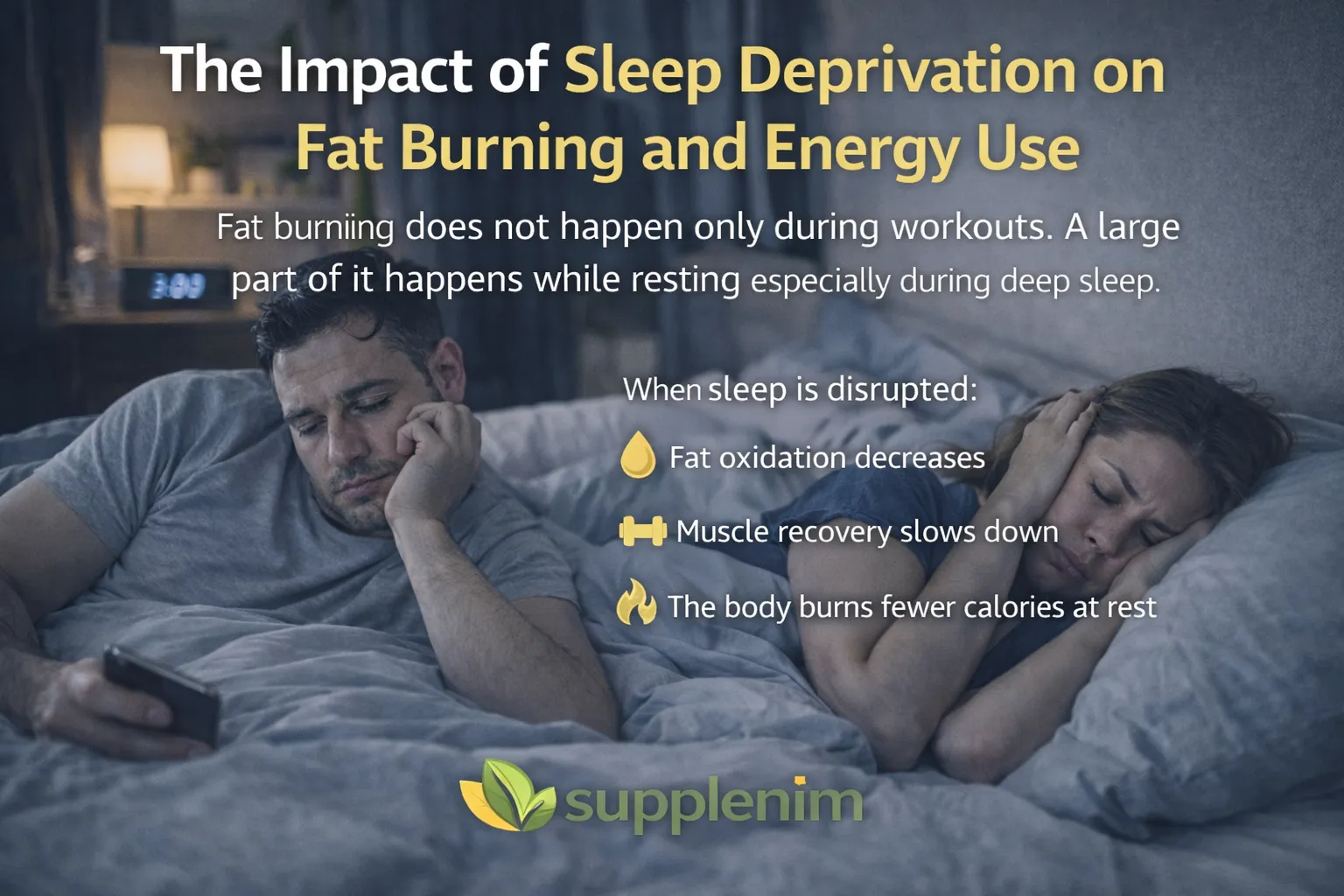
Fat burning does not happen only during workouts. A large part of it happens while resting especially during deep sleep.
When sleep is disrupted:
-
Fat oxidation decreases
-
Muscle recovery slows down
-
The body burns fewer calories at rest
How Sleep Loss Reduces Resting Metabolic Rate (RMR)
Your Resting Metabolic Rate (RMR) is the number of calories your body burns while doing nothing. Studies show that even a few nights of poor sleep can lower RMR, meaning your body needs fewer calories and stores more fat.
This makes weight loss harder and weight gain easier.
Why Poor Sleep Increases Hunger and Slows Calorie Burning
Poor sleep does not just slow metabolism it also increases appetite.
The Link Between Poor Sleep, Cravings, and Fat Storage
Lack of sleep increases cravings for:
-
Sugary foods
-
Refined carbs
-
High-fat snacks
Your brain looks for quick energy when it is tired. This leads to overeating, blood sugar spikes, and fat storage.
At the same time, the body becomes less efficient at burning those extra calories creating a double problem.
Can Poor Sleep Slow Down Metabolism Even With a Healthy Diet?
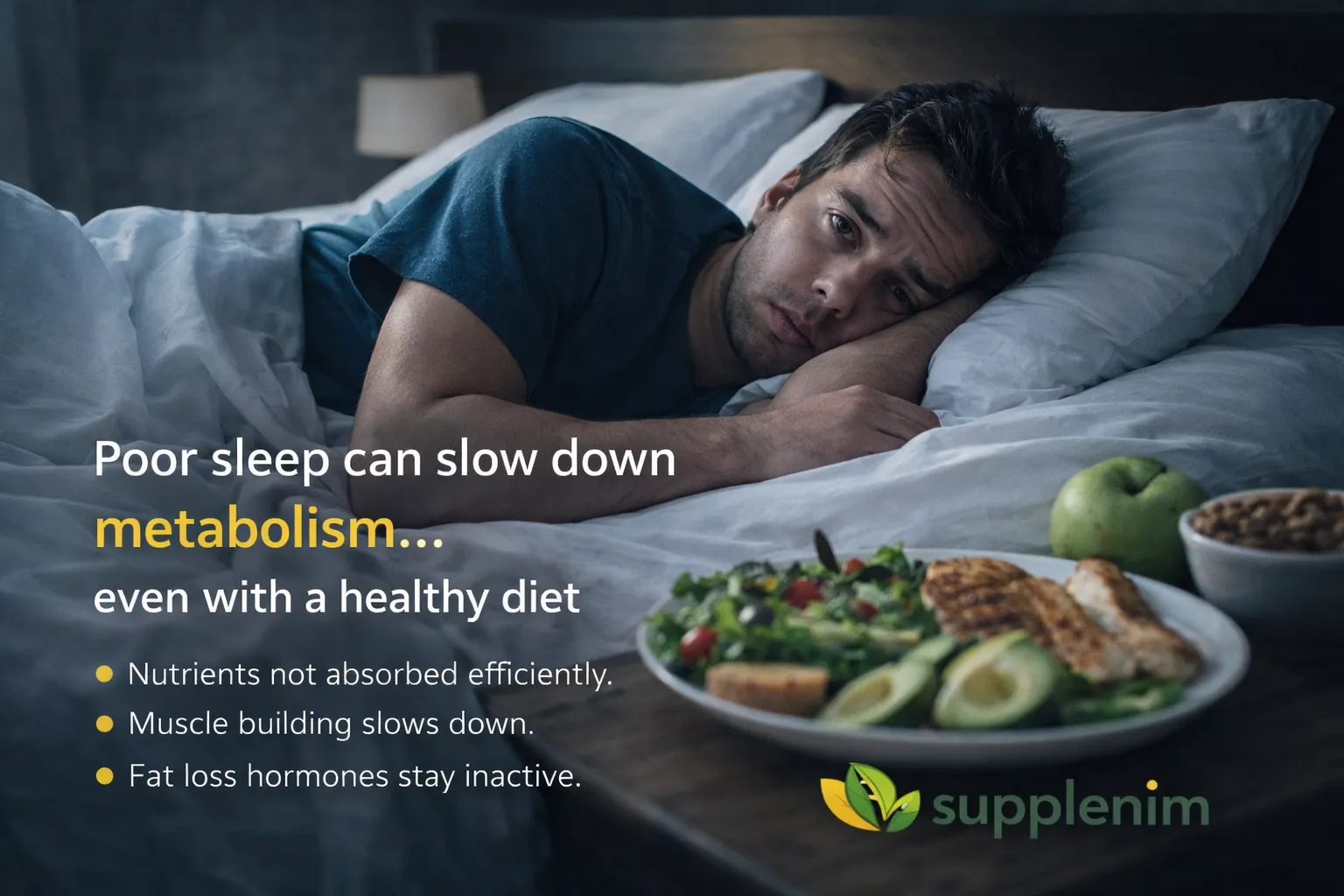
Yes. Even if you eat clean, poor sleep can still damage your metabolism.
Healthy food supports your body, but sleep controls how well your body uses that food. Without enough sleep:
-
Nutrients are not absorbed efficiently
-
Muscle building slows down
-
Fat loss hormones stay inactive
This is why many people say, “I eat healthy but still can’t lose weight.”
Sleep quality is often the missing piece.
Long-Term Metabolic Damage Caused by Chronic Poor Sleep
Occasional bad sleep is normal. But chronic sleep deprivation causes long-term damage.
Over time, poor sleep can lead to:
-
Persistent insulin resistance
-
Slower thyroid activity
-
Reduced muscle mass
-
Higher body fat percentage
These changes make metabolic recovery harder and increase the risk of obesity, type 2 diabetes, and hormonal imbalance.
Signs Your Metabolism Is Suffering Due to Poor Sleep

You may not realize your metabolism is slowing down. Common signs include:
-
Constant fatigue
-
Unexplained weight gain
-
Strong late-night cravings
-
Difficulty losing fat
-
Brain fog and low focus
If these symptoms appear along with poor sleep, your metabolism may be under stress.
How Improving Sleep Quality Can Restore Metabolic Balance
The good news is that metabolism is recoverable with better sleep habits.
Simple steps that help:
-
Go to bed at the same time daily
-
Avoid screens 1 hour before sleep
-
Reduce caffeine intake after afternoon
-
Keep your bedroom dark and cool
How Much Sleep Is Needed to Support a Healthy Metabolism?
Most adults need 7-9 hours of quality sleep each night. Deep, uninterrupted sleep allows the body to:
-
Reset hormones
-
Repair muscles
-
Restore metabolic efficiency
Consistent sleep improves fat burning, energy levels, and appetite control naturally.
FAQs Can Poor Sleep Slow Down Metabolism?
Q.1 Does lack of sleep stop fat loss?
Yes, lack of sleep can slow fat loss by reducing fat burning and lowering metabolic efficiency.
Poor sleep also disrupts hunger hormones, leading to overeating and cravings.
Over time, this makes it harder for the body to use stored fat for energy.
Q.2 What is blocking my weight loss?
Poor sleep, high stress, and hormone imbalance are common factors that block weight loss.
Lack of quality sleep slows metabolism and increases hunger signals.
Even with a healthy diet, these issues can prevent consistent fat loss.
Q.3 Does your body burn more calories when sleep deprived?
No, the body usually burns fewer calories when sleep deprived.
Poor sleep lowers resting metabolic rate and reduces fat-burning efficiency.
This makes the body store more energy instead of using it.
Q.4 What are the side effects of lack of sleep?
Lack of sleep can cause fatigue, poor focus, and increased hunger.
It also disrupts hormones, slows metabolism, and weakens immunity.
Over time, it may lead to weight gain and long-term health issues.
Q.5 How to increase metabolism while sleeping?
You can support metabolism during sleep by maintaining a consistent sleep schedule.
Eating a balanced dinner and avoiding late-night sugar helps hormone balance.
Deep, uninterrupted sleep allows the body to burn calories more efficiently.
Final Thoughts: Can Poor Sleep Slow Down Metabolism?
Yes, poor sleep can slow down metabolism, reduce fat burning, increase hunger, and block weight loss even with a healthy diet.
Sleep is not optional for metabolic health. It is a core pillar, just like nutrition and exercise.
If you want a faster metabolism, better energy, and sustainable fat loss, start by fixing your sleep. Small improvements in sleep quality can create powerful changes in how your body works.
About the Author
Written by Supplenim Health, a platform focused on sharing research-based insights on weight loss, metabolism, and nutrition.
Medical Disclaimer
This article is for informational purposes only and does not provide medical advice. Always consult a healthcare professional before making health-related decisions.