


Losing weight can feel confusing, especially when common foods are labeled as “good” one day and “bad” the next.
Rice is one of the most debated foods in weight loss diets, and brown rice is often seen as the healthier option.
That is why many people search for brown rice weight loss to understand whether it truly helps or just adds calories.
The truth is simple: brown rice does not burn fat on its own, but when used correctly, it can support fat loss, control hunger, and fit well into a calorie-controlled diet.
This guide explains how brown rice works, how to eat it properly, and whether it actually helps with weight loss.
Is Brown Rice Good for Weight Loss?
One of the most common questions is: is brown rice good for weight loss, or should it be avoided?
Brown rice is a whole grain that contains:
-
Fiber
-
Complex carbohydrates
-
Small amounts of protein
Because it digests slowly, it keeps you full longer compared to refined grains.
That is why brown rice for weight loss can work when portions are controlled.
The problem is not brown rice itself.
The problem is how much and how often people eat it.
Read More: Best Dressing for Weight Loss That Supports Fat Burning
Brown Rice Calories for Weight Loss: What You Need to Know

Calories matter in every weight loss plan.
On average:
-
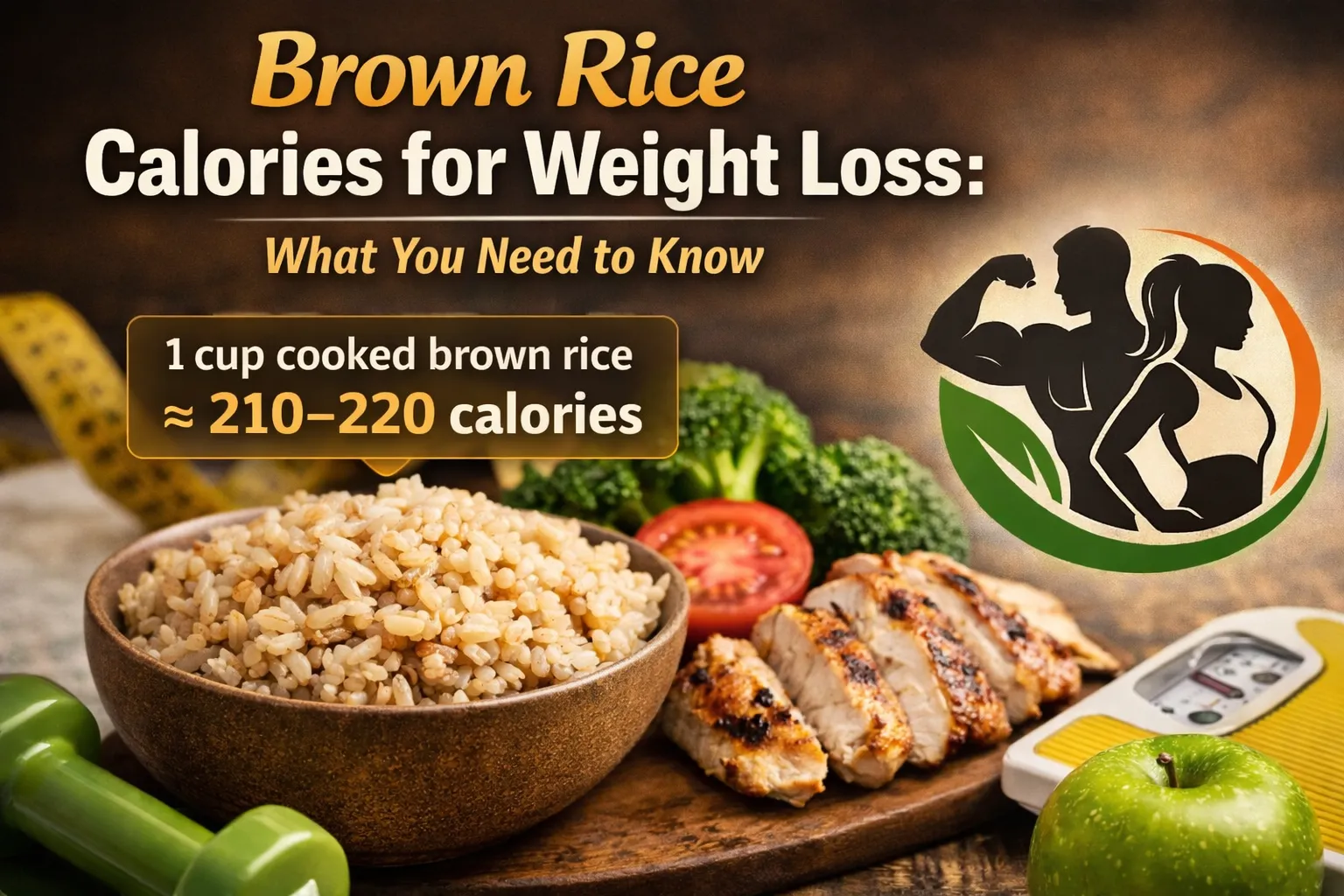
1 cup cooked brown rice has around 210–220 calories
This means brown rice calories for weight loss are moderate, not low.
Brown rice works best when:
-
You measure portions
-
You balance it with protein and vegetables
-
You stay in a calorie deficit
Eating large bowls of rice daily will slow fat loss, even if the rice is brown.
Brown Rice vs White Rice for Weight Loss
The comparison between brown rice vs white rice for weight loss comes up often.
Brown rice:
-
Higher fiber
-
Slower digestion
-
Better blood sugar control
White rice:
-
Lower fiber
-
Faster digestion
-
Easier to overeat
For weight loss, brown rice is usually the better option because it helps control hunger.
However, portion size matters more than the rice type.
Can You Eat Brown Rice and Lose Weight?
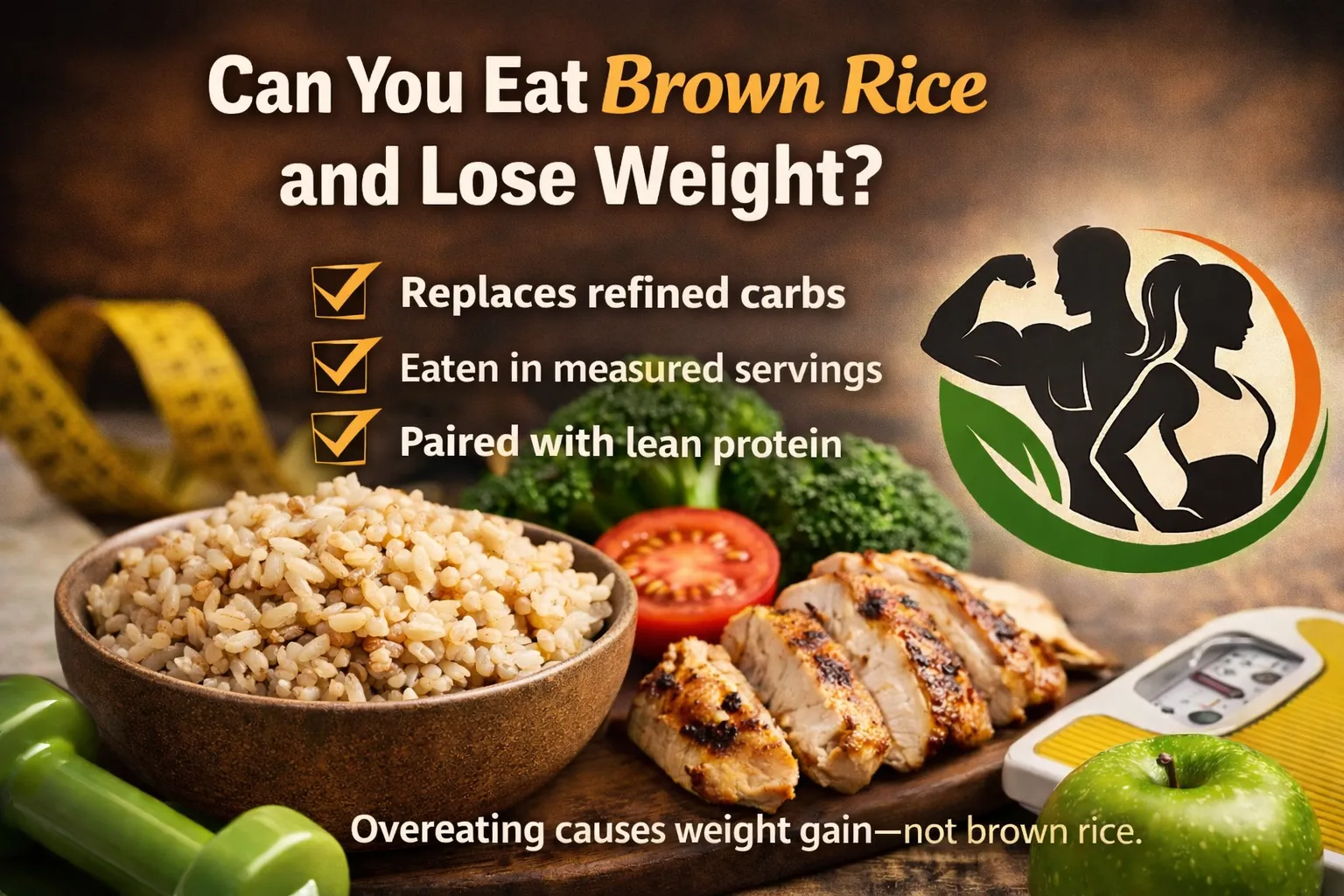
Yes, you can eat brown rice and lose weight if it fits your calorie needs.
Brown rice supports fat loss when:
-
It replaces refined carbs
-
It is eaten in measured servings
-
It is paired with lean protein
Brown rice does not cause weight gain on its own. Overeating does.
Best Portion of Brown Rice for Weight Loss
Portion control is the key.
The best portion of brown rice for weight loss is:
-
½ cup cooked per meal (most people)
This amount provides energy without pushing you out of a calorie deficit.
Using a bowl instead of measuring cups is one of the biggest mistakes people make.
Brown Rice in a Calorie Deficit Diet
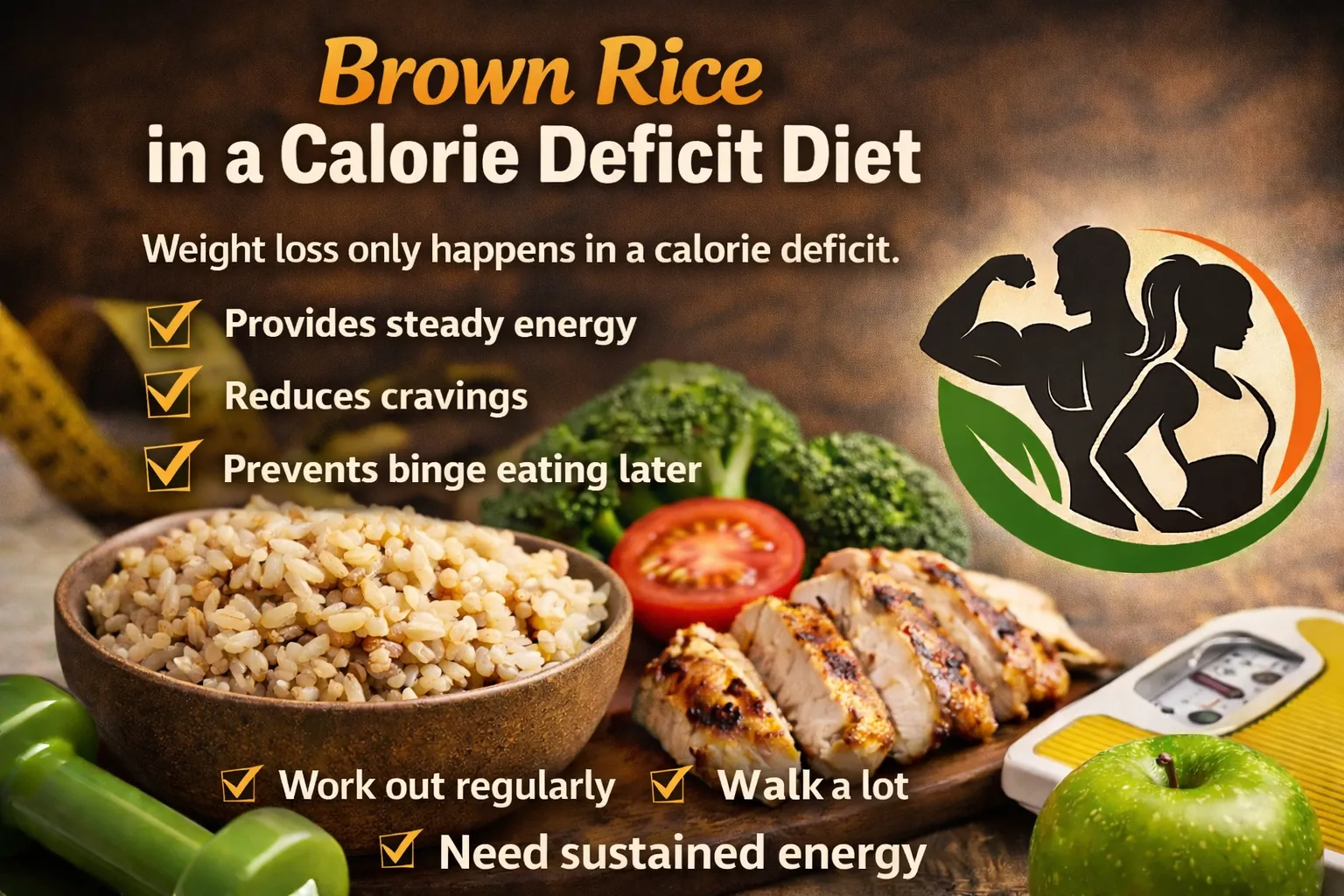
Weight loss only happens in a calorie deficit.
Brown rice in a calorie deficit diet works because:
-
It provides steady energy
-
It reduces cravings
-
It prevents binge eating later
Brown rice is especially useful for people who:
-
Work out regularly
-
Walk a lot
-
Need sustained energy
Brown Rice Healthy Carb for Weight Loss
Carbs are not the enemy.
Brown rice is considered a healthy carb for weight loss because:
-
It is less processed
-
It contains fiber
-
It supports digestion
Completely cutting carbs often leads to low energy and poor consistency.
Brown rice helps avoid that.
Does Brown Rice Help Burn Fat?
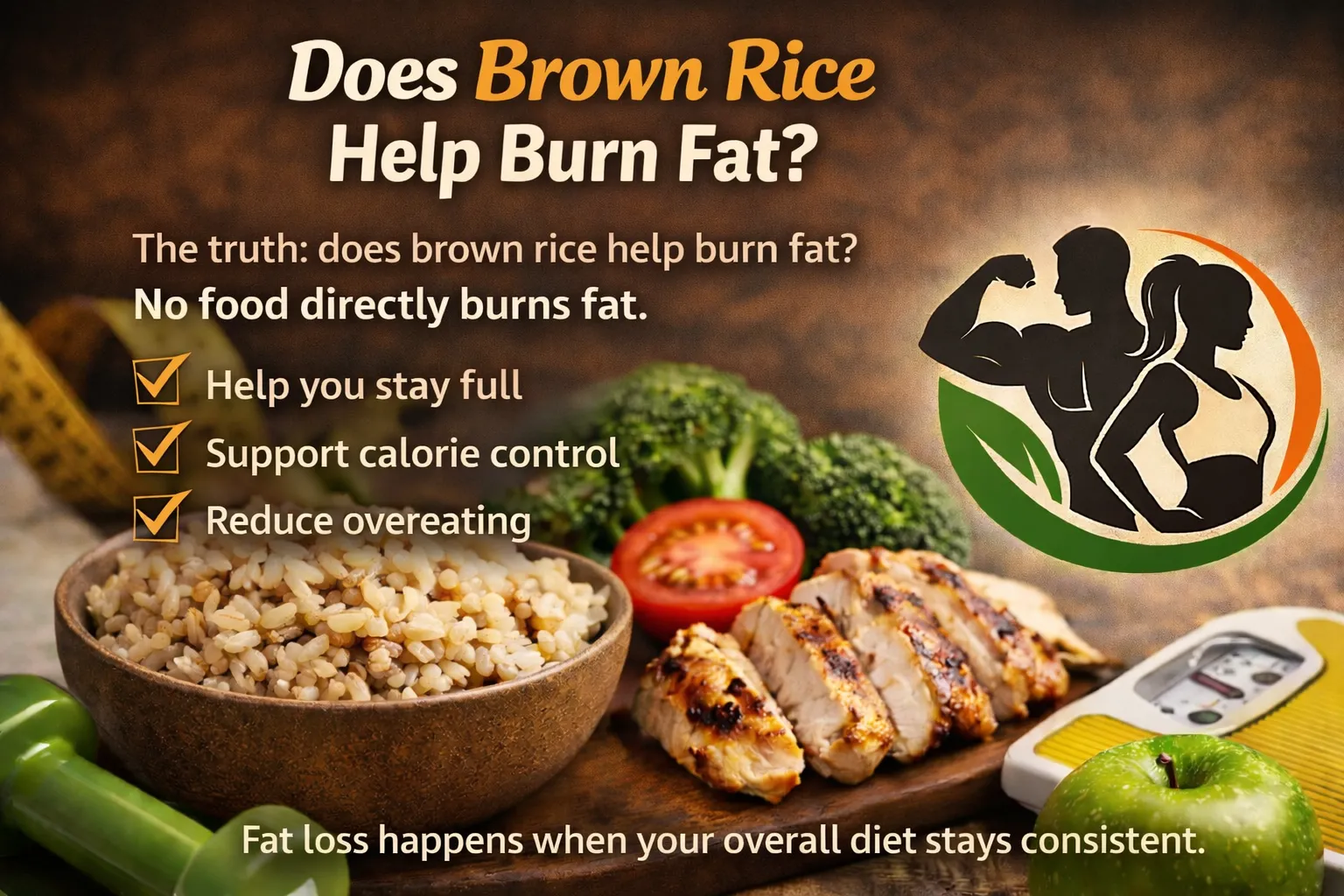
A common myth is that brown rice burns fat.
The truth: does brown rice help burn fat?
No food directly burns fat.
What brown rice does is:
-
Help you stay full
-
Support calorie control
-
Reduce overeating
Fat loss happens when your overall diet stays consistent.
Brown Rice Glycemic Index and Weight Loss
Brown rice has a moderate glycemic index, lower than white rice.
For brown rice glycemic index weight loss, this means:
-
Slower blood sugar spikes
-
Better appetite control
-
Less crash hunger
This makes brown rice a smarter option for people managing cravings.
Brown Rice Weight Loss Recipes
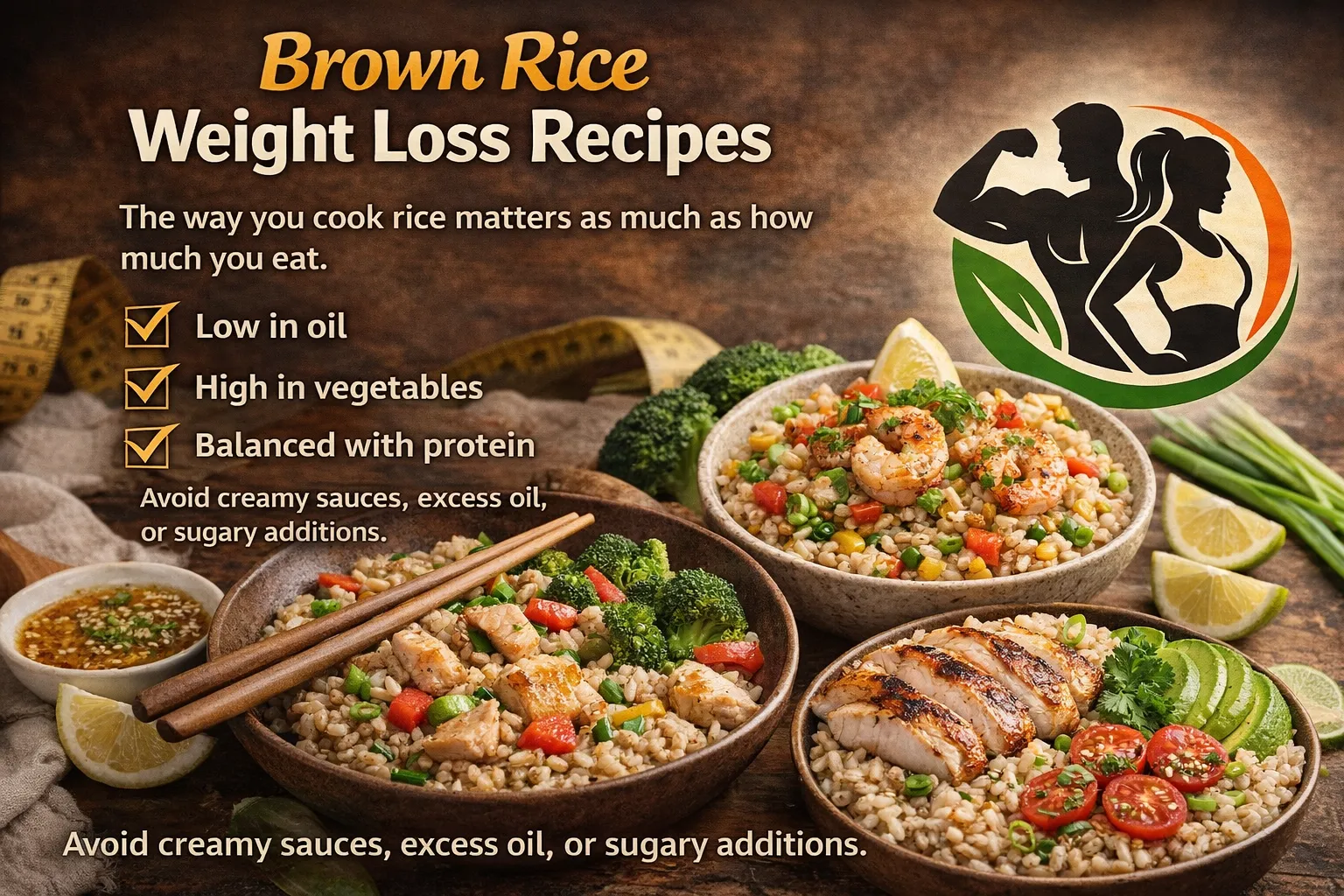
The way you cook rice matters as much as how much you eat.
Brown rice weight loss recipes should be:
-
Low in oil
-
High in vegetables
-
Balanced with protein
Avoid creamy sauces, excess oil, or sugary additions.
Simple Brown Rice Meals for Weight Loss
If you want easy meals, keep it simple.
Simple brown rice meals for weight loss include:
-
Brown rice + grilled chicken + vegetables
-
Brown rice + beans + salad
-
Brown rice + fish + steamed greens
Simple meals are easier to control and repeat consistently.
How to Eat Brown Rice for Weight Loss
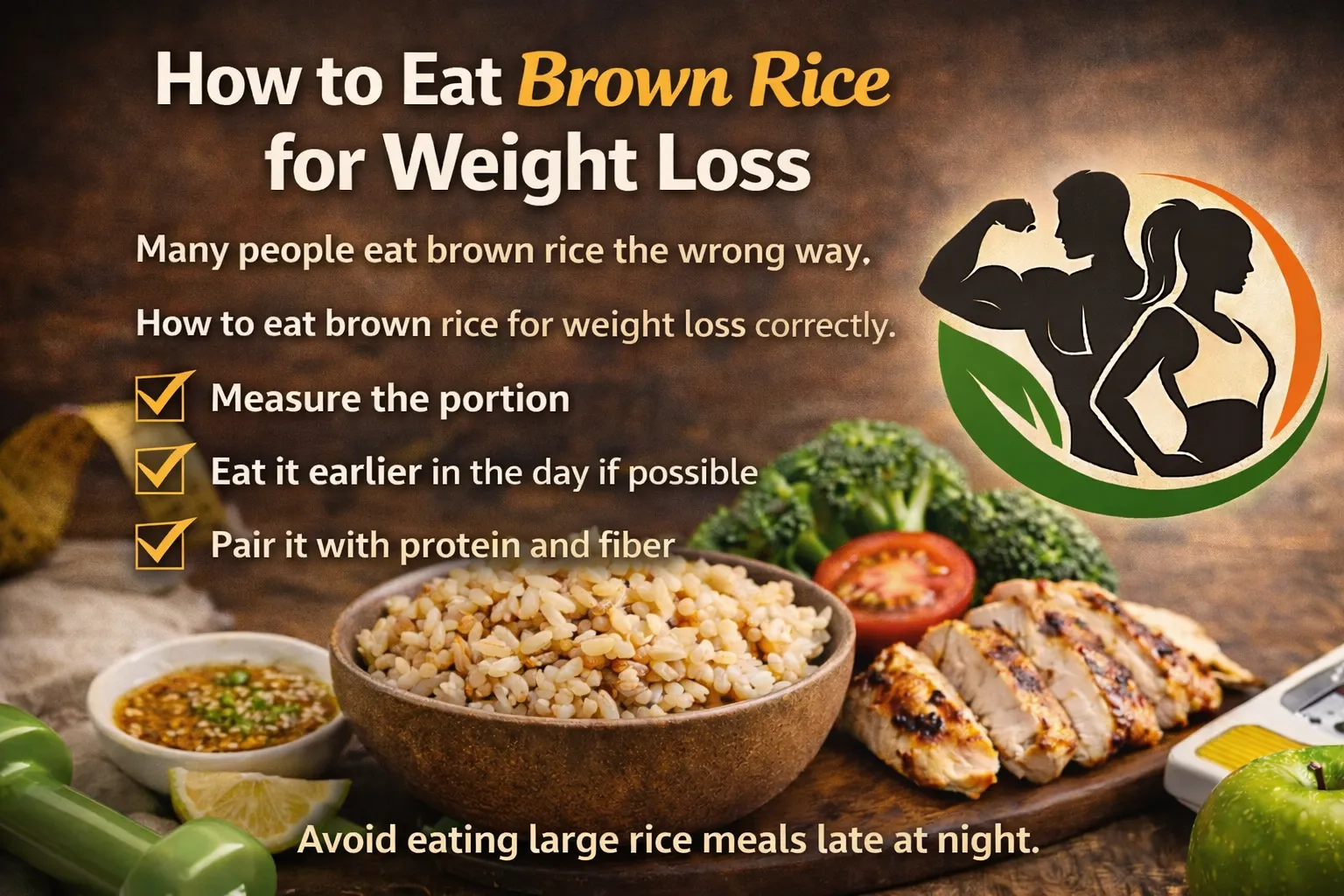
Many people eat brown rice the wrong way.
How to eat brown rice for weight loss correctly:
-
Measure the portion
-
Eat it earlier in the day if possible
-
Pair it with protein and fiber
Avoid eating large rice meals late at night.
Best Brown Rice Recipe for Weight Loss
The best brown rice recipe for weight loss is simple and balanced.
A good plate looks like:
-
½ cup brown rice
-
Lean protein (chicken, fish, tofu)
-
Large serving of vegetables
This keeps calories controlled and hunger low.
Brown Rice Weight Loss Meals
Brown rice weight loss meals should feel satisfying, not restrictive.
Meals that feel filling help you stay consistent, which matters more than perfection.
Brown Rice Weight Loss Diet Plan (Simple Example)
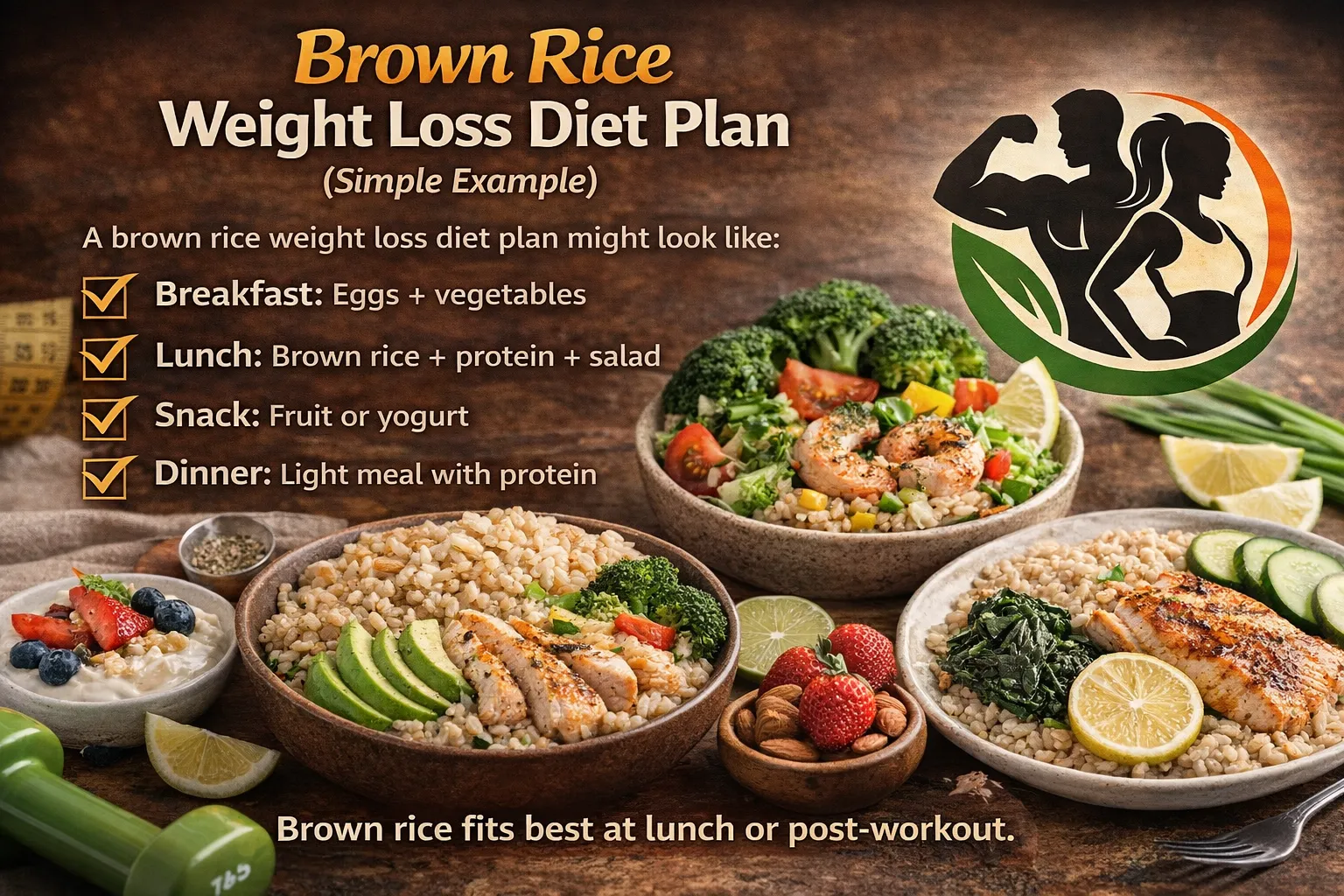
A brown rice weight loss diet plan might look like:
-
Breakfast: Eggs + vegetables
-
Lunch: Brown rice + protein + salad
-
Snack: Fruit or yogurt
-
Dinner: Light meal with protein
Brown rice fits best at lunch or post-workout.
Brown Rice Recipe for Weight Loss Dinner
Dinner should be lighter.
A brown rice recipe for weight loss dinner:
-
Small portion of rice
-
High vegetables
-
Lean protein
If weight loss slows, reduce rice at dinner first.
Brown Rice Pulao Recipe for Weight Loss
Yes, you can still enjoy pulao.
A brown rice pulao recipe for weight loss works when:
-
Oil is minimal
-
Vegetables are increased
-
Portion size is controlled
Healthy cooking methods make a big difference.
Is Brown Rice Fattening or Healthy?
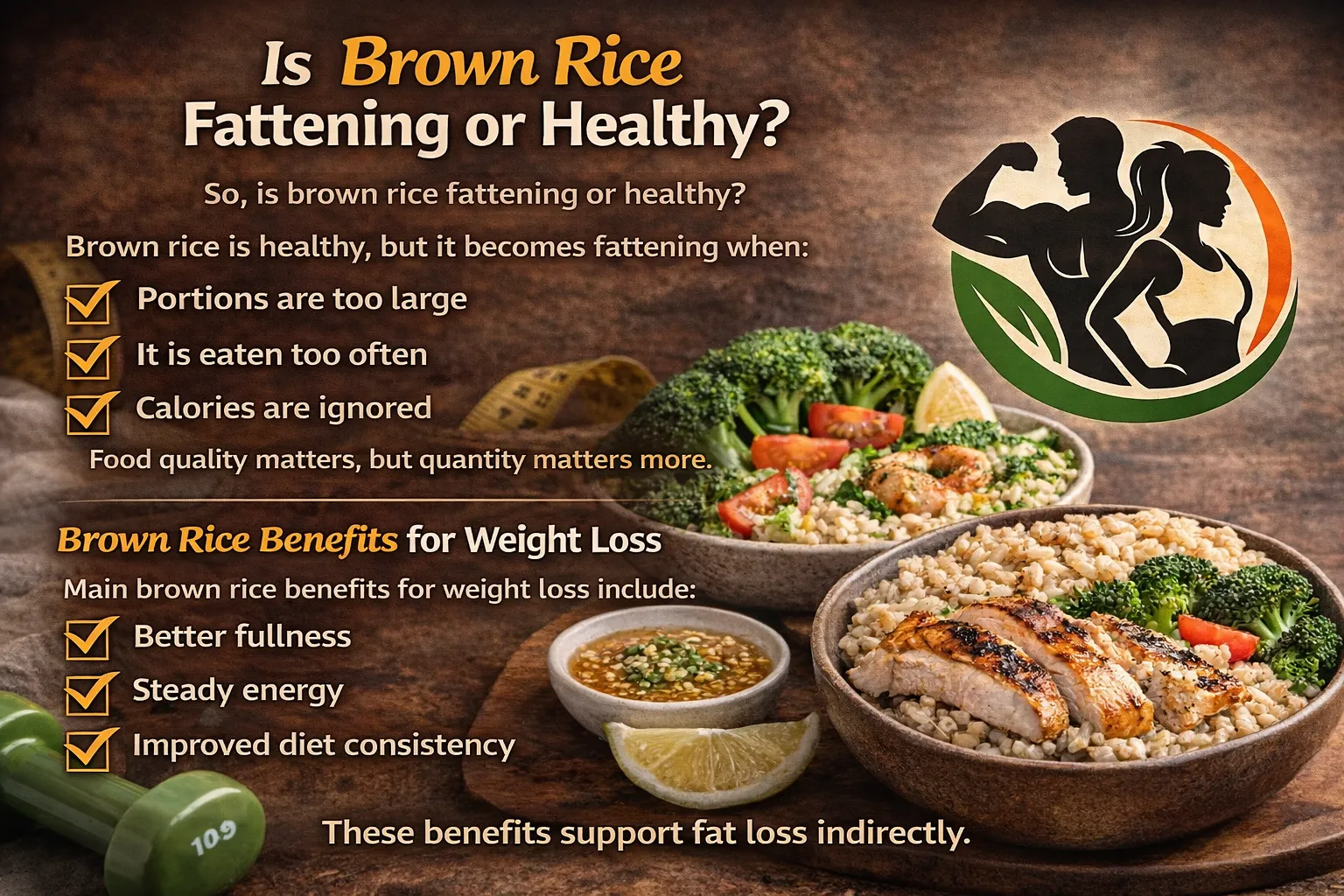
So, is brown rice fattening or healthy?
Brown rice is healthy, but it becomes fattening when:
-
Portions are too large
-
It is eaten too often
-
Calories are ignored
Food quality matters, but quantity matters more.
Brown Rice Benefits for Weight Loss
Main brown rice benefits for weight loss include:
-
Better fullness
-
Steady energy
-
Improved diet consistency
These benefits support fat loss indirectly.
Common Mistakes That Stop Brown Rice From Helping Weight Loss
Many people blame rice instead of habits.
Common mistakes:
-
Oversized portions
-
Too much oil
-
Eating rice with no protein
-
Ignoring total calories
Even healthy foods fail with poor habits.
Conclusion: Brown Rice Weight Loss What Actually Works
Brown rice weight loss is not about burning fat magically.
Brown rice helps when it:
-
Fits your calorie needs
-
Is eaten in the right portion
-
Is balanced with protein and vegetables
-
Supports long-term consistency
For most people, brown rice can be part of a successful fat loss diet.
The key is control, balance, and realistic eating habits.
Weight loss is not about removing foods.
It is about using foods correctly.
FAQs Brown Rice Weight Loss
Q.1 Is brown rice good for weight loss?
It is high in fiber, keeps you full longer, and helps control cravings.
Weight loss depends on total calories, not brown rice alone.
Q.2 Can I eat brown rice daily?
Stick to small servings and balance it with protein and vegetables.
Eating too much, even daily, can slow weight loss.
Q.3 Is brown rice high in sugar?
It contains complex carbohydrates that digest slowly and do not spike blood sugar quickly.
Portion control keeps it weight-loss friendly.
Q.4 Which is healthier, white or brown rice?
It keeps you full longer and supports better blood sugar control.
White rice is easier to digest but less filling for weight loss.
Q.5 Why do Chinese eat white rice and not brown rice?
White rice cooks faster, tastes softer, and works well with vegetables and protein-rich meals.
Health depends on the overall diet, not just the type of rice eaten.
About the Author
Written by Supplenim Health, a platform focused on sharing research-based insights on weight loss, metabolism, and nutrition.
Medical Disclaimer
This article is for informational purposes only and does not provide medical advice. Always consult a healthcare professional before making health-related decisions.