



For many years, I believed I was doing everything right to lose weight. I followed strict diets, ate very little food, and forced myself to exercise more. Still, my body did not change the way I expected. I felt tired, hungry, and confused most of the time.
That is when I started asking myself an important question: How long does it take to fix slow metabolism? I did not know it back then, but my biggest mistake was slowly damaging my metabolism instead of helping it.
This article shares what I learned from that mistake and how fixing my metabolism helped me lose fat in a healthier way.
Biggest Weight Loss Mistake I Made for Years: Thinking Less Food Means Faster Fat Loss
My biggest mistake was believing that eating less food would automatically make me lose fat faster. Whenever my weight did not go down, I reduced my food even more. I thought hunger meant progress.
I felt proud when I skipped meals because I believed it showed discipline. In reality, my body did not see this as fat loss. It saw this as a danger situation. When the body does not get enough food for a long time, it tries to save energy.
It slows down the metabolism so fewer calories are burned. This is the body’s natural survival system. Instead of burning stored fat, my body started holding onto it.
How This One Mistake Slowed My Metabolism Without Me Realizing
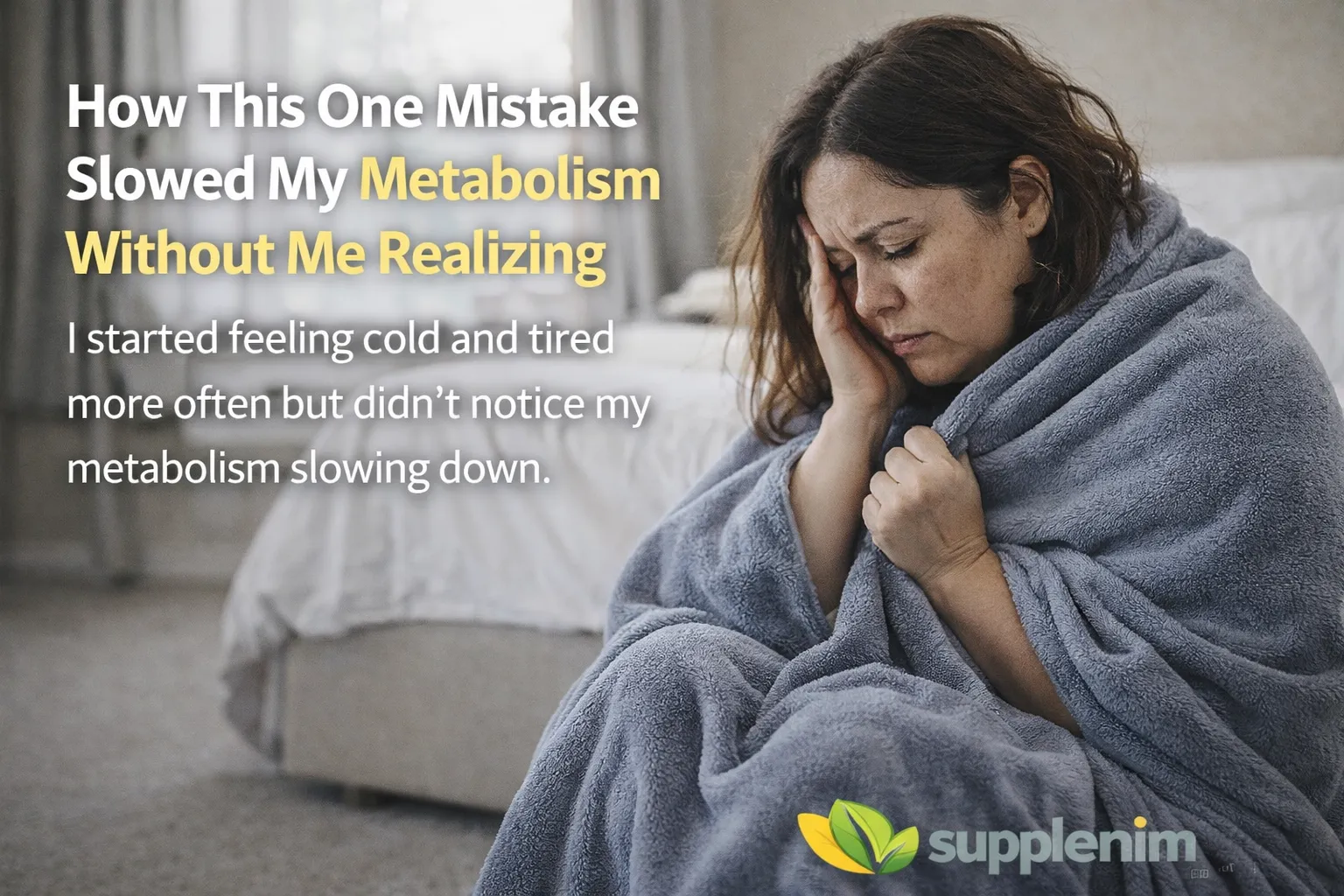

I did not notice my metabolism slowing down at first. It happened slowly over time. I started feeling cold more often. I was tired even after sleeping.
My workouts felt harder than before. I became hungry all the time and still did not lose fat. These were signs that my metabolic rate was getting lower.
My body was not broken. It was reacting to stress from eating too little, training too much, and sleeping too poorly.
This made me realize that my real problem was not lack of effort. My real problem was a slow metabolism caused by long term under eating.
Why Dieting Harder Never Fixed My Weight Problem
Each time my weight loss stopped, I tried to become more strict with my diet. I skipped breakfast, removed carbs, removed fats, and made my portions smaller and smaller.
I also increased exercise. I believed that more control would solve the problem. Instead, my body became more stressed. My hunger hormones increased and my fat burning hormones decreased.
My stress hormone level stayed high, which made fat loss even harder. No matter how hard I tried, my body resisted.
Dieting harder did not fix my weight problem because my metabolism was already under pressure.
Hidden Signals My Body Gave That I Was Doing Weight Loss Wrong

My body gave me many warning signs, but I ignored them because I only cared about the scale. I experienced low energy, poor sleep, hair fall, mood swings, weak digestion, and strong food cravings.
My belly fat did not go away even when my weight dropped a little. These signals showed that my body was not healthy on the inside. Weight loss should not make you feel sick and weak.
When metabolism slows down, the body focuses on survival instead of fat loss. These symptoms were signs that my method was hurting me instead of helping me.
The Real Reason My Fat Stayed Even When the Scale Went Down
Sometimes my weight went down, but my body shape did not improve. I still looked soft and unhealthy. This happened because I was losing water and muscle instead of fat.
Muscle is important for metabolism. When muscle mass decreases, the body burns fewer calories at rest. That means fat loss becomes harder over time. I was chasing a lower number on the scale instead of real fat loss.
This is why many people feel stuck even when they eat very little. The body adapts and protects fat stores when metabolism slows down.
What I Changed After Discovering My Biggest Weight Loss Mistake

When I understood my mistake, I stopped treating my body like an enemy. I started eating enough food instead of starving. I focused on protein, whole foods, and regular meals.
I reduced extreme exercise and added strength training. I improved my sleep and tried to lower daily stress. I stopped fearing food and stopped thinking of dieting as punishment.
I learned that slow metabolism needs fuel, rest, and balance to recover. Over time, my energy returned and my body started responding again.
How Fixing This Mistake Helped Me Lose Fat Without Starving
Once my metabolism began to recover, fat loss felt different. I did not feel hungry all the time. My mood improved. My sleep became better.
My waist slowly became smaller. I was no longer fighting my body. Fat loss became steady instead of extreme. This taught me that fixing metabolism must come before trying to lose fat.
When the body feels safe and supported, it starts using fat as energy naturally. That is why many experts now say that metabolism recovery is more important than extreme calorie cutting.
The Difference Between Eating Less and Eating Right
Eating less simply means reducing calories without caring about nutrients. Eating right means giving the body what it needs to function properly.
This includes enough protein, healthy fats, natural carbohydrates, and vitamins from whole foods. Eating right supports hormones and energy levels.
Eating less without nutrition only increases stress. Long-term fat loss happens when the body is nourished, not when it is starved.
Why My Body Started Storing Fat Instead of Burning It
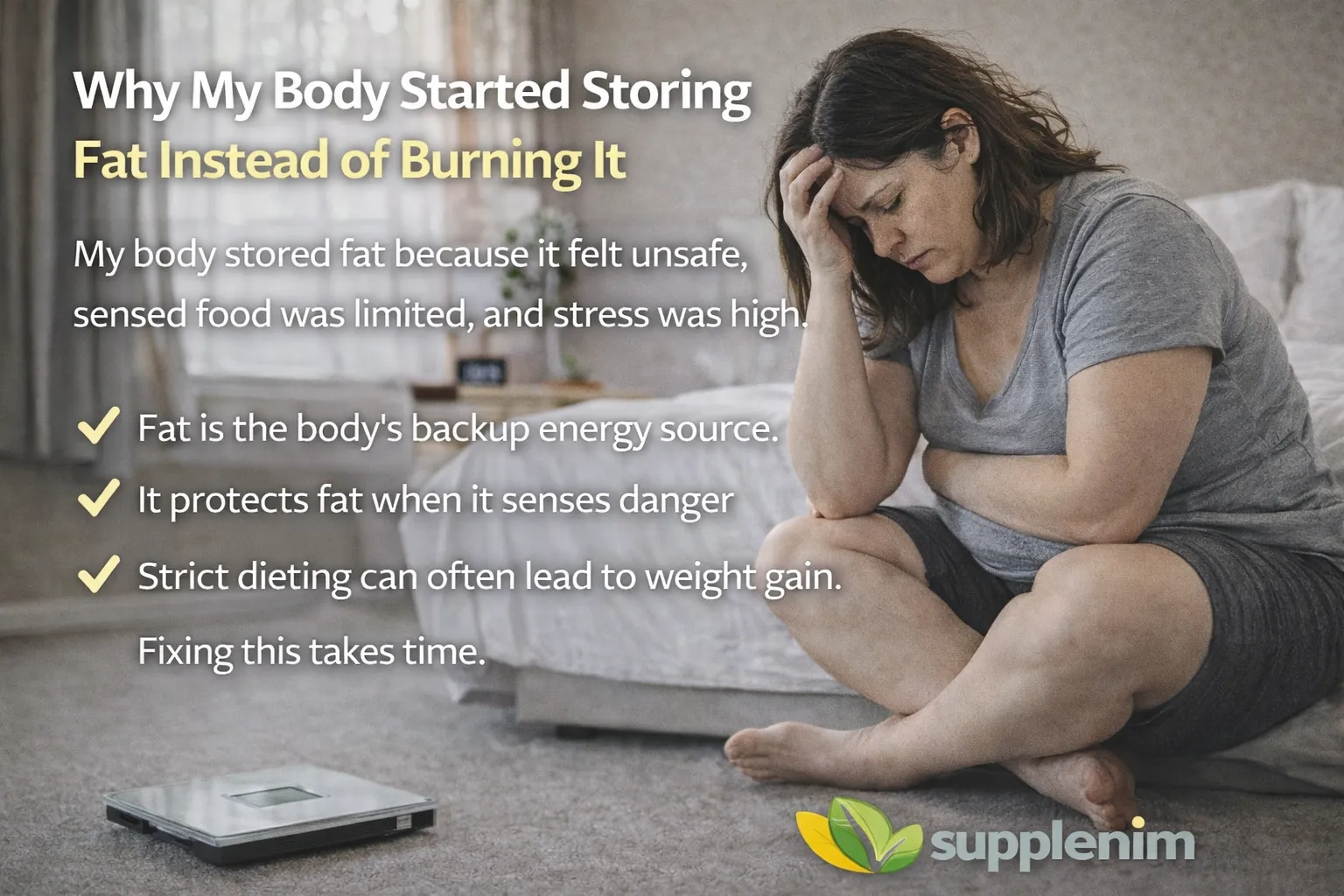
My body stored fat because it felt unsafe. It believed food was limited and stress was high. Fat is the body’s backup energy source. When the body senses danger, it protects fat.
This is why people who diet too hard often gain weight again. Fixing this takes time. So when people ask, How long does it take to fix slow metabolism?, the answer depends on how long the damage lasted.
For many people, visible improvement can start in a few weeks, but full recovery can take several months.
How Stress and Poor Sleep Made the Mistake Even Worse
Stress and sleep have a strong effect on metabolism. High stress increases cortisol, which blocks fat burning and increases fat storage around the belly.
Poor sleep increases hunger and lowers insulin sensitivity. Even a good diet cannot work properly without proper rest. That is why lifestyle matters as much as food.
Metabolism is not controlled by diet alone. It is controlled by sleep, stress, activity, and hormones together.
The Simple Habit That Started Real Fat Loss for Me
The habit that helped me the most was eating regular meals instead of starving randomly. I stopped skipping meals and started eating breakfast, lunch, and dinner consistently.
This sent a message to my body that food was available. Over time, my hunger became normal and my cravings reduced.
This simple habit helped lower stress hormones and improved fat burning naturally. Small changes done consistently can create powerful results.
What I Wish I Knew Years Earlier About Healthy Weight Loss

I wish I knew that weight loss is not about fighting food. It is about healing the body.
Healthy weight loss means supporting metabolism, balancing hormones, building muscle, sleeping well, and reducing stress.
If I had understood this earlier, I would not have slowed my metabolism through extreme dieting.
I would have focused on long-term health instead of short-term results.
FAQs Biggest Weight Loss Mistake I Made for Years
Q.1 Why am I not losing weight even though I am dieting?
You may not be losing weight because your metabolism has slowed down from eating too little for too long.
High stress, poor sleep, and muscle loss can also stop fat burning even when calories are low.
Your body may need better nutrition and recovery, not stricter dieting, to lose fat again.
Q.2 What’s the hardest age to lose weight?
The hardest age to lose weight is usually after 30 because metabolism naturally slows down and muscle mass starts to decrease.
Hormone changes and higher stress levels also make fat loss more difficult at this stage of life.
This means weight loss needs smarter eating and better lifestyle habits, not just less food.
Q.3 What is blocking my weight loss?
Your weight loss may be blocked by a slow metabolism caused by long-term dieting, stress, or poor sleep.
Hormone imbalance and muscle loss can also make your body store fat instead of burning it.
To fix this, your body needs proper nutrition, rest, and a healthier routine, not extreme dieting.
Q.4 Is your true weight morning or night?
Your true weight is best measured in the morning after using the bathroom and before eating or drinking anything.
At this time, your body has less water and food inside, so the number is more accurate.
Night weight is usually higher because of meals, water, and daily activity.
Q.5 At what age do females gain the most weight?
Females often gain the most weight between their late 20s and 40s because metabolism slows down and muscle mass decreases.
Hormone changes related to stress, pregnancy, and lifestyle can also increase fat storage during this time.
This makes healthy eating, strength training, and good sleep more important than strict dieting.
Conclusion
My biggest weight loss mistake was believing that eating less would solve everything. In reality, eating too little slowed my metabolism and made fat loss harder.
When I started eating better, resting more, and training smarter, my body changed naturally. If you feel tired, stuck, and hungry all the time, your body may not need another strict diet. It may need recovery.
So when you ask, How long does it take to fix slow metabolism?, remember that the answer depends on your habits, your stress level, your sleep, and your past dieting history.
But once metabolism heals, fat loss becomes something your body does naturally instead of something you must force.