

Have you noticed that after turning 25, your belly fat starts increasing even if you don’t eat much junk food? You are not alone. Many adults experience sudden weight gain around the stomach area after age 25, and it often feels confusing and frustrating.
Earlier, you could eat anything and still stay slim. But now, even small lifestyle changes seem to add inches to your waistline. This happens due to multiple hidden factors that slowly affect your body as you grow older.
In this article, we will break down the real reasons why belly fat increases after age 25, using simple explanations, real-life examples, and practical solutions you can actually follow.
Read more: I Tried Losing Weight, This Mistake Ruined Everything
Slower Metabolism After Age 25
One of the biggest reasons belly fat after 25 becomes common is a slow metabolism.
Metabolism is the process by which your body converts food into energy. In your early 20s, your metabolism is naturally fast. You burn calories even while resting. But after age 25, this process starts slowing down.
Why metabolism slows with age
-
Muscle mass gradually decreases
-
Physical activity reduces
-
Hormonal changes affect calorie burning
Slow metabolism symptoms
-
Gaining weight even on normal food
-
Feeling tired easily
-
Fat storing mostly around the belly
Real-life example:
Earlier, you walked more, stayed active, and slept better. After 25, office work, sitting for long hours, and screen time increase which directly impacts metabolism.
Solution:
-
Eat protein in every meal
-
Walk at least 7,000-10,000 steps daily
-
Do light strength training 3 times a week
Muscle Mass Starts Declining Naturally
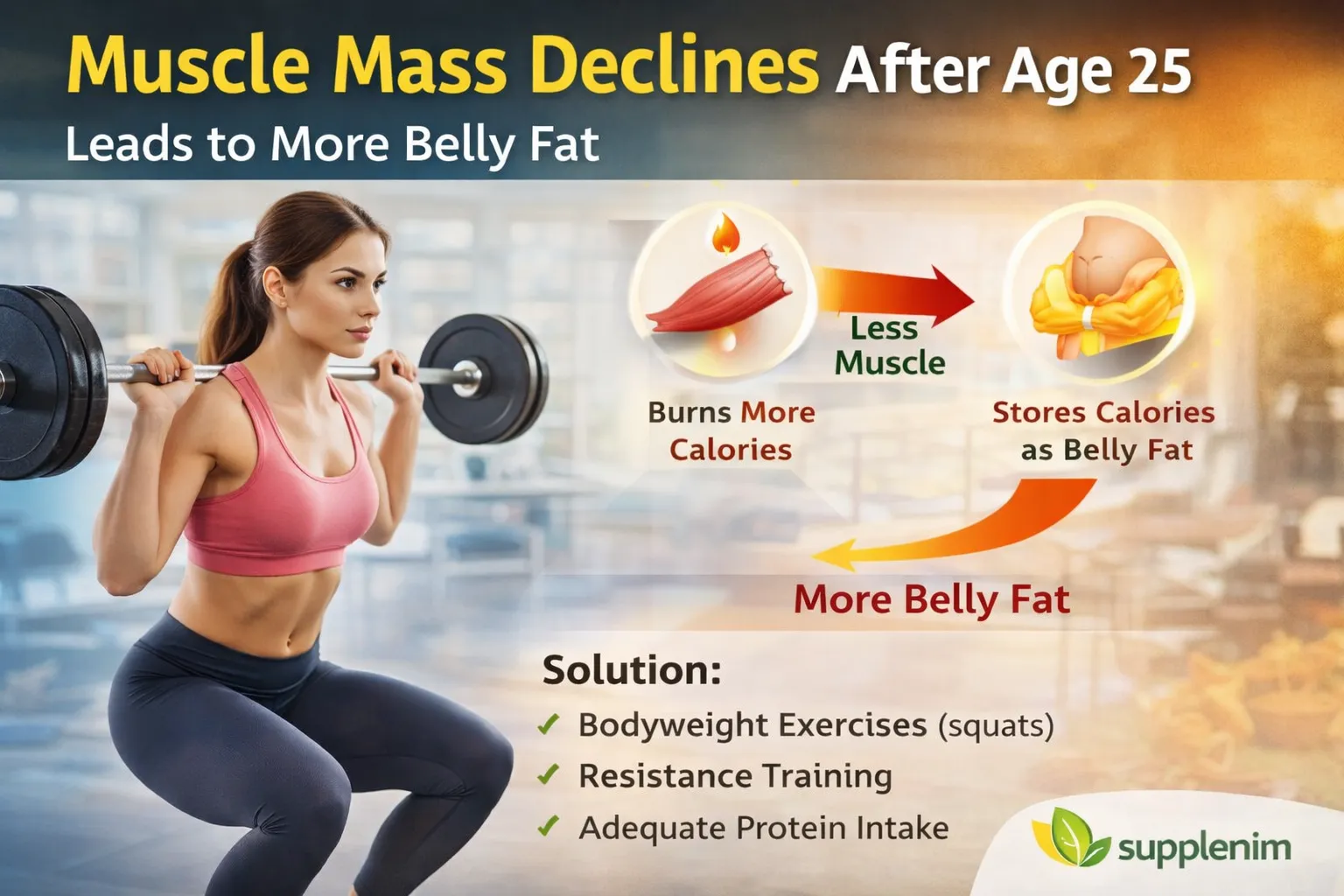
After age 25, your body slowly starts losing muscle mass if you don’t actively work to maintain it. Muscle plays a huge role in burning calories.
Less muscle = fewer calories burned = more fat storage.
How muscle loss leads to fat gain after 25 years
-
Muscles burn more calories than fat
-
Less muscle means lower energy usage
-
Extra calories get stored as belly fat
This is one of the most ignored adult weight gain reasons.
Solution:
-
Bodyweight exercises (squats, push-ups)
-
Resistance training 2-3 times per week
-
Adequate protein intake
Even 20 minutes a day can help preserve muscle and reduce belly fat reasons in adults.
Hormonal Changes That Promote Belly Fat
Hormones play a massive role in hormonal belly fat.
After age 25:
-
Cortisol (stress hormone) increases
-
Insulin sensitivity reduces
-
Testosterone (in men) and estrogen balance (in women) changes
High cortisol levels directly lead to cortisol belly fat, especially around the lower abdomen.
Real-life trigger:
Deadlines, job pressure, financial stress, lack of sleep all increase cortisol levels.
Solution:
-
Sleep 7-8 hours daily
-
Reduce caffeine after evening
-
Practice deep breathing or meditation
Balancing hormones naturally is key to managing visceral fat after 25.
Increased Stress and Poor Sleep Patterns
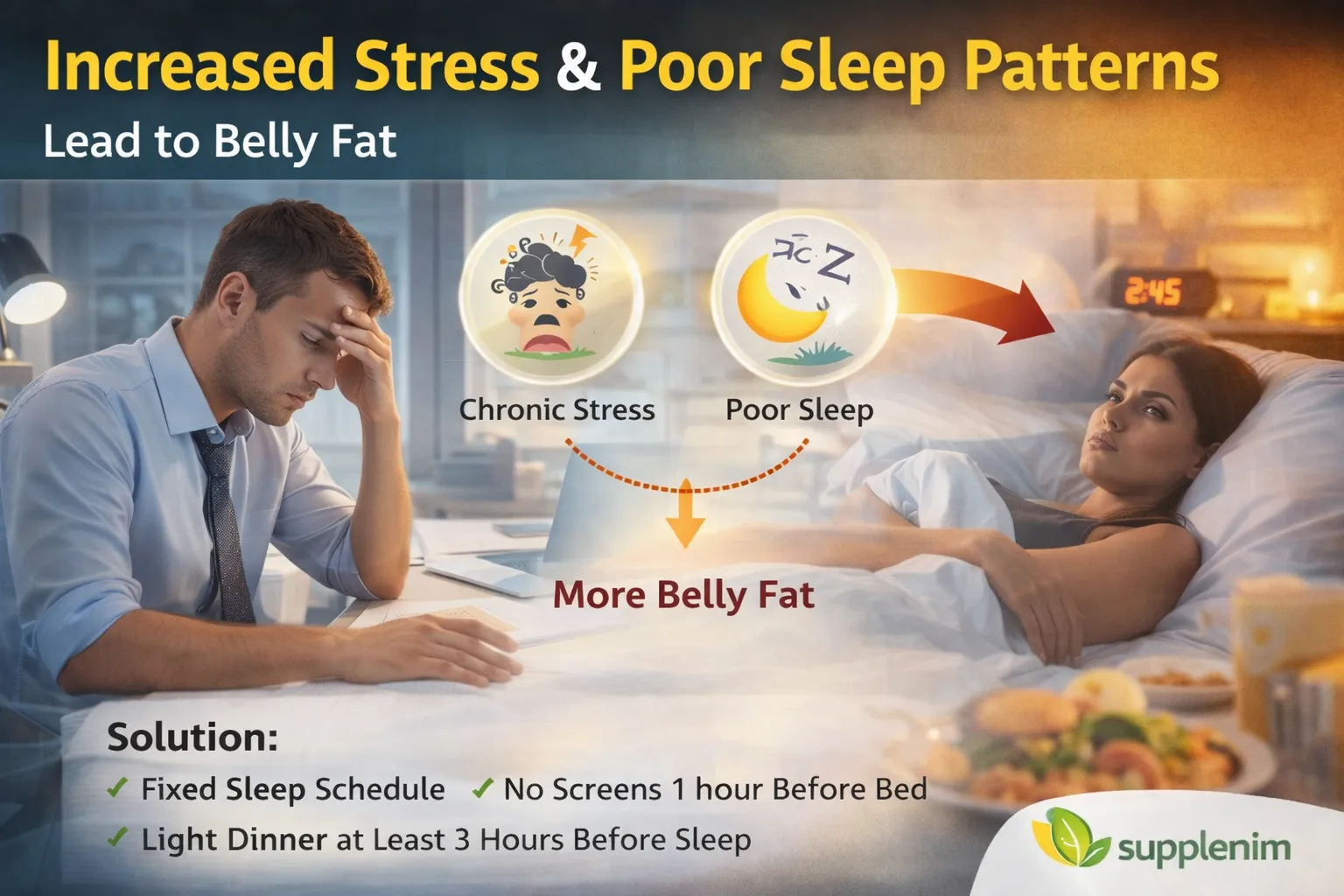
Stress and belly fat are deeply connected.
After 25, responsibilities increase:
-
Job pressure
-
Family expectations
-
Financial stress
Chronic stress increases cortisol, which signals your body to store fat especially in the belly.
Poor sleep further worsens the situation:
-
Increases hunger hormones
-
Slows fat burning
-
Triggers late-night cravings
This is why why losing belly fat is hard for working adults.
Solution:
-
Fixed sleep schedule
-
No screens 1 hour before bed
-
Light dinner at least 3 hours before sleep
Sedentary Lifestyle and Less Physical Activity
One of the biggest contributors to office lifestyle weight gain is sitting for long hours.
Earlier:
-
You walked more
-
Played sports
-
Stayed physically active
Now:
-
8-10 hours sitting
-
Minimal movement
-
Weekend-only activity
This sedentary routine leads to belly fat after 25, even without overeating.
Solution:
-
Stand up every 30-40 minutes
-
Short walks during breaks
-
Stretching or mobility exercises
Small movements throughout the day matter more than intense workouts once a week.
Poor Gut Health and Digestion Issues

Many people don’t realize the connection between gut health and belly fat.
After 25:
-
Junk food increases
-
Fiber intake decreases
-
Gut bacteria balance gets disturbed
This leads to bloating, inflammation, and poor digestion weight gain.
Signs of poor gut health:
-
Frequent bloating
-
Gas and acidity
-
Constipation
Solution:
-
Eat more fiber (vegetables, fruits)
-
Include probiotics (curd, fermented foods)
-
Drink enough water
Improving digestion alone can reduce inches from your waist.
Unhealthy Eating Habits After 25
Your eating habits change silently after 25, leading to unhealthy lifestyle after 25.
Common mistakes:
-
Skipping breakfast
-
Late-night eating
-
High sugar and refined carbs
-
Frequent ordering food
Even if calorie intake seems normal, poor food quality leads to stubborn belly fat causes.
Solution:
-
Balanced meals with protein, fiber, and healthy fats
-
Reduce sugar and processed foods
-
Eat mindfully, not emotionally
Food timing and quality matter more than extreme dieting.
Why Belly Fat Becomes More Stubborn With Age
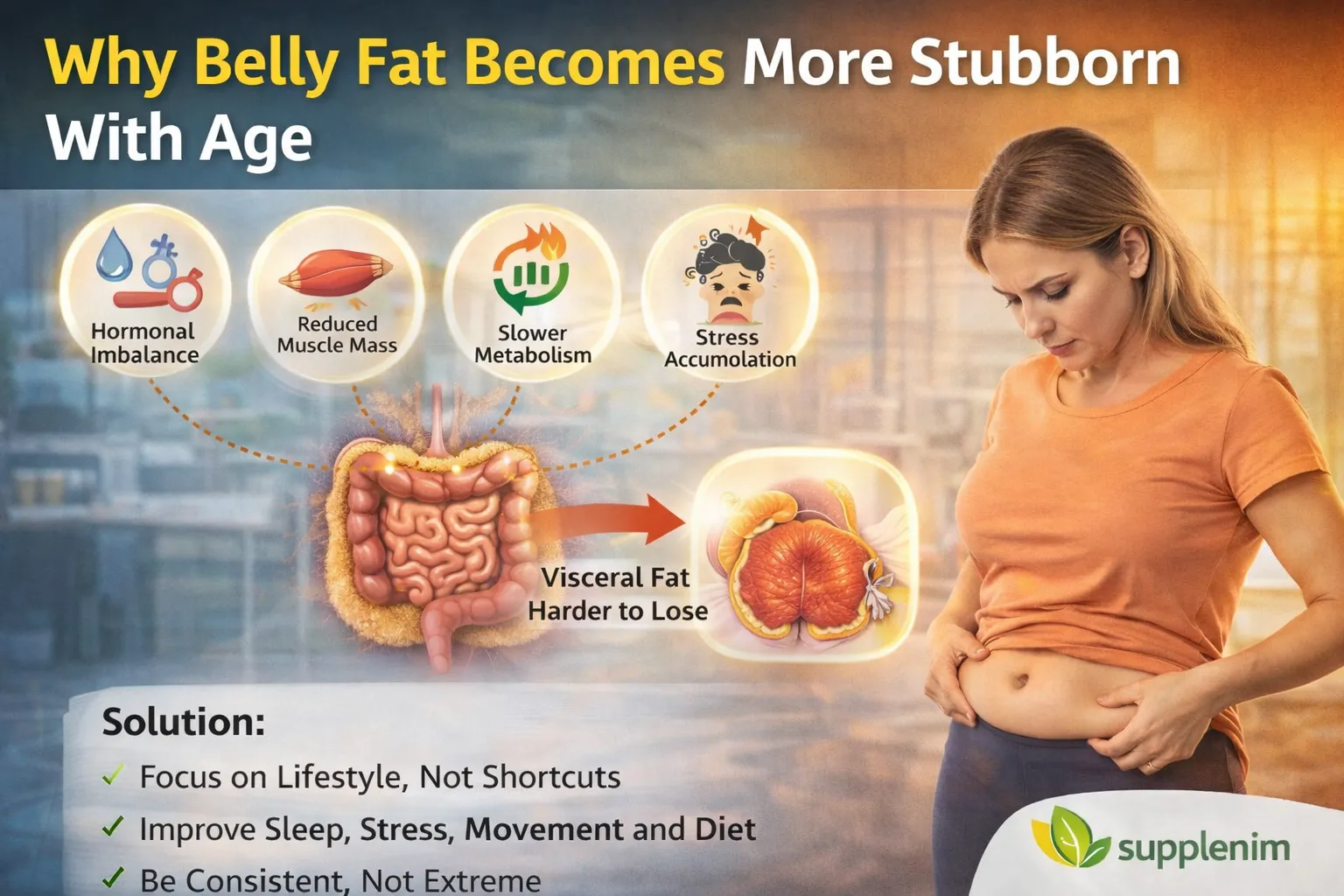
As you age, belly fat becomes more resistant due to:
-
Hormonal imbalance
-
Reduced muscle mass
-
Slower metabolism
-
Stress accumulation
This fat is often visceral fat after 25, which surrounds internal organs and is harder to lose.
Crash diets and extreme workouts usually fail because they don’t fix the root causes.
Solution approach:
-
Focus on lifestyle, not shortcuts
-
Improve sleep, stress, movement, and diet
-
Be consistent, not extreme
FAQs Why Belly Fat Increases After Age 25
Q.1 Why am I getting belly fat in my 20s?
You may be getting belly fat in your 20s due to a slower metabolism, increased stress, poor sleep, and a more sedentary lifestyle.
Long sitting hours, unhealthy eating habits, and hormonal changes also cause fat to store around the belly. Making small improvements in diet, movement, and sleep can help control it.
Q.2 Is it difficult to lose weight after 25?
Yes, losing weight after 25 can feel more difficult because metabolism slows down and muscle mass starts to decline. Stress, poor sleep, and a busy lifestyle also make fat loss harder. However, with consistent healthy habits, weight loss is still completely possible.
Q.3 What kills belly fat the fastest?
There is no instant way to kill belly fat, but the fastest results come from combining a healthy diet, regular exercise, and good sleep. Reducing sugar, managing stress, and staying active daily help burn fat more effectively. Consistency works better than extreme diets or workouts.
Q.4 At what age do females gain the most weight?
Most females tend to gain weight between their mid-20s and mid-30s due to hormonal changes, slower metabolism, and lifestyle shifts like work stress and reduced activity. Pregnancy, poor sleep, and emotional eating can also contribute during this phase. Healthy habits can help manage weight at any age.
Q.5 How to improve metabolism after 25?
You can improve metabolism after 25 by staying physically active, eating enough protein, and building muscle through strength training. Getting proper sleep and managing stress also help balance hormones that affect metabolism. Small daily habits make a big difference over time.
Conclusion:
Understanding Why Belly Fat Increases After Age 25 helps you take control instead of blaming yourself.
Belly fat is not just about eating less it’s about:
-
Hormones
-
Metabolism
-
Lifestyle
-
Stress
-
Gut health
The good news?
With small, consistent changes, belly fat can be reduced naturally and sustainably.
Start slow, stay patient, and focus on long-term habits. Your body will respond no matter your age.
About the Author
Written by Supplenim Health, a platform focused on sharing research-based insights on weight loss, metabolism, and nutrition.
Medical Disclaimer
This article is for informational purposes only and does not provide medical advice. Always consult a healthcare professional before making health-related decisions.